
Commercial roofing decisions are long-term commitments. The system you choose today will define your building’s performance, maintenance burden, and capital expenditure schedule for the next two to four decades. If your current roof is aging and you are evaluating what comes next, standing seam roof panels deserve serious consideration alongside the single-ply and modified bitumen systems that dominate most commercial replacement conversations. Understanding how standing seam fits into the full range of available commercial roofing systems is a practical starting point before any replacement decision is made.
Here’s what you’ll learn in this guide:
- What standing seam roof panels are and how they differ from exposed fastener metal systems
- The seven strongest reasons to upgrade to standing seam on a commercial building
- How standing seam performs across the full lifecycle compared to competing systems
- What building types and applications are best suited for standing seam
- What to look for when evaluating a contractor for standing seam installation
What Makes Standing Seam Worth Understanding For Commercial Buildings
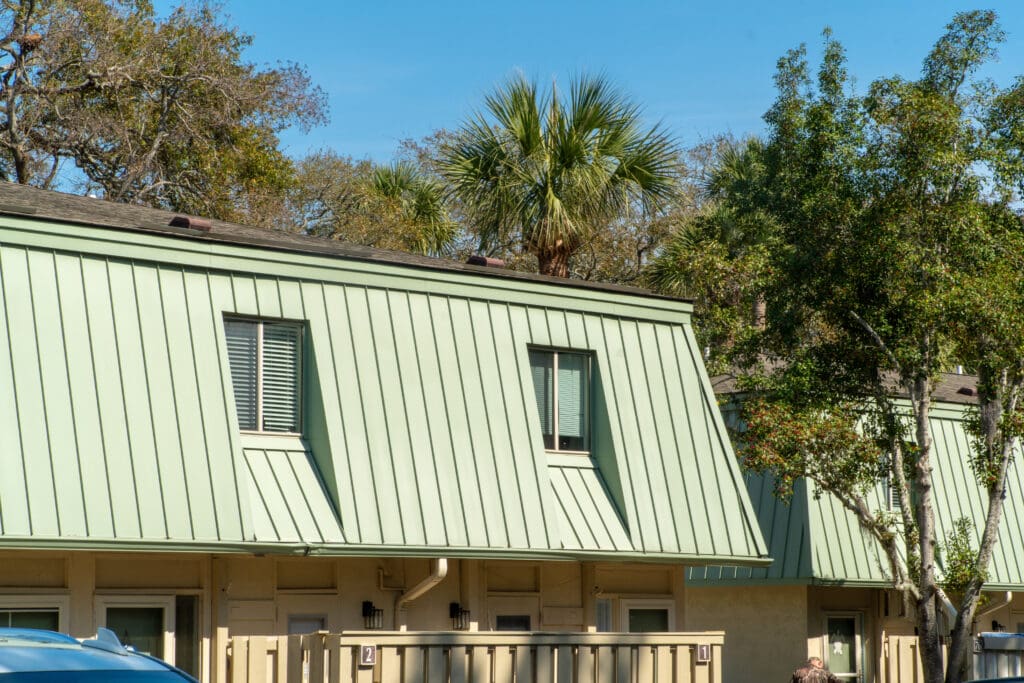
Standing seam metal roofing is not new. It has been specified on commercial and institutional buildings for well over a century, and its continued relevance in an era of competing single-ply and modified bitumen alternatives is not a matter of tradition. It is a reflection of genuine performance characteristics that the roofing industry has not been able to replicate in cheaper systems.
The defining feature of standing seam is its concealed fastener design. Where exposed fastener metal roofing drives screws directly through the panel face and relies on rubber washers to seal those penetrations, standing seam attaches panels to the structural substrate through hidden clips that engage the raised seam. The panel face itself has no fastener penetrations. That single design difference has cascading effects on leak resistance, thermal movement accommodation, maintenance requirements, and service life that make standing seam a fundamentally different category of product from other commercial metal systems.
For commercial property owners across Pennsylvania and surrounding areas evaluating long-term roofing investments, the case for standing seam is worth examining in detail before defaulting to whatever the first contractor recommends.
- No exposed fastener penetrations: Every screw driven through a metal panel face is a potential leak point. Standing seam eliminates that vulnerability entirely by securing panels through concealed clips rather than through the panel surface.
- Exceptional longevity: Properly installed standing seam metal roofing systems on commercial buildings routinely perform for 40 to 60 years with appropriate maintenance. That service life outperforms most competing commercial roofing systems by a factor of two to three.
- Low maintenance requirements: With no exposed fasteners to re-seal and no seam adhesive to re-bond, standing seam systems have significantly lower maintenance demands over their service life than either exposed fastener metal or single-ply membrane systems.
- Strong wind uplift resistance: The mechanically locked or snap-lock seam geometry of standing seam panels provides outstanding resistance to wind uplift, a critical performance factor for commercial buildings across Pennsylvania and surrounding areas subject to severe wind events.
- Full thermal movement accommodation: Concealed clips allow panels to float and move with thermal expansion and contraction without creating stress at fastener points or seams. This accommodation of thermal movement is why standing seam systems do not develop the oil-canning stress or fastener back-out problems that affect exposed fastener systems over time.
7 Reasons To Upgrade To Standing Seam Roof Panels
The decision to upgrade to standing seam is a capital investment with a specific set of returns that compound over the life of the system. Here are the seven most compelling reasons that commercial property owners across Pennsylvania and surrounding areas make that investment.
1. No Fastener Penetrations Through the Panel Face
The most fundamental advantage of standing seam over every competing metal panel system is the elimination of fastener penetrations through the panel surface. On an exposed fastener system, every screw creates a potential leak point that depends on a rubber washer to maintain its seal. Those washers have a finite service life, and as they degrade through UV exposure and thermal cycling, each fastener location becomes progressively more vulnerable to water infiltration.
A large commercial exposed fastener roof may have thousands of individual fastener penetrations. Each one is a maintenance point. Standing seam removes that entire category of vulnerability from the equation.
- Concealed clip attachment means the panel face presents an uninterrupted surface to weather with no mechanical penetrations that can admit water or corrode
- The concealed clip system allows the panel to be removed and replaced without disturbing adjacent panels, which simplifies future repair work if individual panel damage occurs
- Elimination of exposed fasteners also eliminates the recurring maintenance cost of fastener inspection, re-torquing, and washer replacement that is standard practice on exposed fastener systems
2. Superior Thermal Movement Accommodation
Metal roofing panels expand and contract with temperature changes, and a commercial metal roof in Pennsylvania and surrounding areas may experience temperature differentials of 100 degrees Fahrenheit or more between winter and summer extremes. How a roofing system accommodates that movement is one of the most important long-term performance factors in any metal roof specification.
Standing seam handles thermal movement by design. Concealed clips are engineered to allow the panel to slide in the direction of thermal movement without transferring stress to the fastener connection. The panel moves freely while the clip remains fixed to the substrate, which means expansion and contraction cycles do not accumulate fatigue at any connection point.
- On long panel runs, the cumulative thermal movement across a commercial building can be significant; a 100-foot panel run in aluminum may expand and contract by over an inch across a full temperature cycle
- Exposed fastener systems resist that movement at every fastener point, creating stress concentrations that eventually cause oil-canning distortion, fastener back-out, or seam fatigue
- Standing seam’s free-floating panel design eliminates those stress concentrations and preserves panel geometry and seam integrity across decades of thermal cycling
3. Exceptional Long-Term Service Life
Standing seam metal roofing systems are among the longest-performing commercial roofing options available. When specified in appropriate materials, Galvalume or aluminum for unpainted applications and high-quality PVDF-coated steel for painted systems, standing seam routinely delivers 40 to 60 years of service life with appropriate maintenance.
That service life dwarfs most competing commercial roofing systems. TPO and EPDM single-ply membranes are typically designed for 15 to 25 year service lives. Modified bitumen systems perform for 20 to 30 years. Built-up roofing reaches 20 to 30 years with consistent maintenance. A standing seam system installed today on a commercial building could outlast two complete cycles of any single-ply alternative installed on the same building.
- The long service life of standing seam translates directly into lower lifecycle cost when replacement frequency is factored into the total cost of ownership comparison
- Insurance and financing considerations also favor longer-lived systems, as predictable capital expenditure timelines allow more accurate long-range financial planning
- For commercial building owners in New York and surrounding areas with long-term ownership horizons, the 40-plus year service life of a quality standing seam system may mean a single installation for the life of the current ownership
4. Significantly Lower Maintenance Requirements
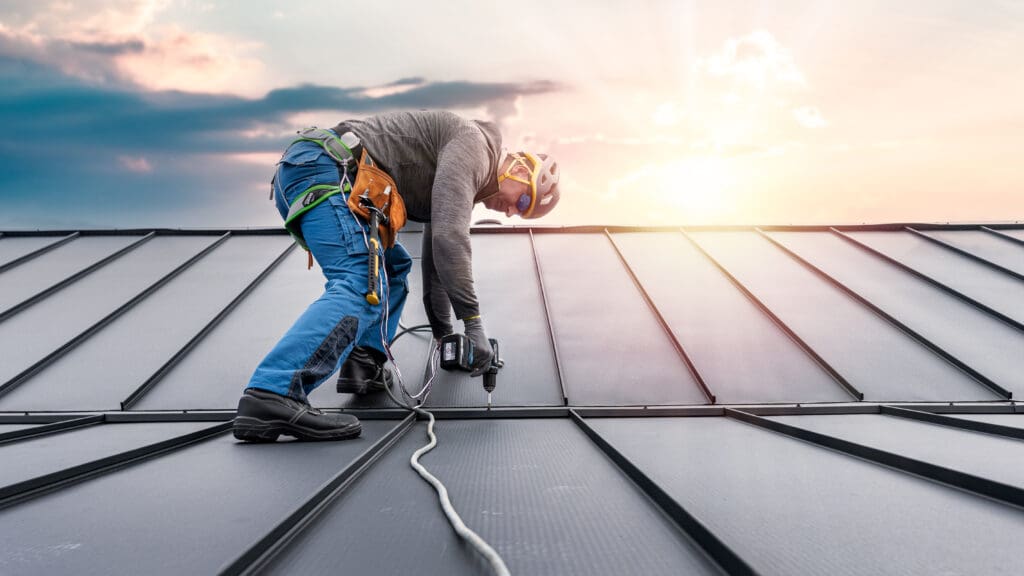
Every year of reduced maintenance activity has a real cost value, and standing seam delivers that reduction in specific and quantifiable ways. The absence of exposed fasteners eliminates the most labor-intensive recurring maintenance task on any exposed fastener metal roof. The mechanically locked or snap-lock seam geometry eliminates seam adhesive bonds that can degrade and require re-sealing. The result is a system that performs reliably between inspections rather than requiring active intervention to remain functional.
Annual inspection is still appropriate for any commercial roofing system, and standing seam is no exception. But the findings of those inspections on a well-installed standing seam roof are typically limited to minor sealant maintenance at penetration flashings and perimeter edge conditions rather than the systemic fastener and seam re-sealing that exposed fastener and single-ply systems require.
- Maintenance cost savings over a 40-year standing seam service life are substantial when compared to the cumulative maintenance expenditure on two or three replacement cycles of single-ply systems covering the same period
- Lower maintenance frequency also means fewer rooftop contractor access events, which reduces the risk of membrane damage from foot traffic that accumulates on any roofing system over time
- Facility managers at commercial properties across New York and surrounding areas benefit from the reduced scheduling burden of a low-maintenance system, particularly in buildings with complex operations that make rooftop access coordination challenging
5. Outstanding Wind Uplift Resistance
Wind uplift is one of the most destructive forces a commercial roof faces, and it is concentrated at perimeter edges, corners, and any discontinuity in the roof surface. Standing seam panel geometry, with its raised and mechanically locked or snap-lock seams, provides inherently high resistance to wind uplift because the seam engagement creates a structural connection between adjacent panels that distributes uplift forces across the seam system rather than concentrating them at individual fastener points.
Many standing seam systems achieve FM Global and UL wind uplift ratings that exceed what is achievable with single-ply or modified bitumen systems on the same structural substrate, making standing seam the appropriate specification for buildings in high-wind exposure categories.
- Perimeter and corner zones of commercial roofs experience the highest wind uplift pressures; standing seam clip spacing can be tightened in these zones to increase uplift resistance where it matters most
- After major wind events across Pennsylvania and surrounding areas, standing seam systems with properly engineered clip spacing and seam engagement consistently outperform exposed fastener and single-ply systems in damage assessments
- Insurance carriers increasingly recognize the superior wind performance of standing seam systems and may offer favorable terms for commercial buildings that specify it
6. Compatibility With Solar and Green Roof Integration
Standing seam roofing is uniquely suited to solar photovoltaic installation because PV mounting clamps can be attached directly to the panel seams without penetrating the panel face. This clamp-on mounting approach eliminates the waterproofing vulnerability that ballasted or mechanically attached solar systems create on flat roof membranes, and it preserves the standing seam warranty in most manufacturer specifications when approved mounting hardware is used.
For commercial property owners evaluating solar integration as part of a roofing upgrade, standing seam is the system that makes that integration simplest, least disruptive to roofing warranty, and most structurally straightforward.
- Seam-clamped solar mounting eliminates roof penetrations entirely from the solar installation, which is the primary warranty concern with PV systems on membrane roofing
- The long service life of standing seam is also a practical match with the 25-plus year performance horizon of commercial solar installations; a membrane roof that requires replacement before the solar system reaches end of life creates a complex and expensive disruption to the PV system
- Green roof assemblies can also be integrated with standing seam on appropriate low-slope applications, with the panel system providing the waterproofing base for a growing medium and vegetation layer above
7. Architectural Versatility and Long-Term Curb Appeal
Standing seam metal roofing is available in a wide range of panel profiles, seam heights, widths, and color options that allow it to suit virtually any commercial architectural context. From industrial warehouses to corporate office buildings to healthcare facilities, standing seam can be specified in profiles and finishes that complement the building’s design intent in ways that membrane roofing systems simply cannot match.
PVDF paint finishes on commercial standing seam panels are rated for 30 to 40 years of color and gloss retention, which means the building’s roofline maintains its appearance over a service life that would see a single-ply membrane replaced multiple times. For commercial property owners in New York and surrounding areas where building appearance affects tenant attraction, property valuation, and brand perception, that long-term visual consistency has real economic value.
- Panel widths typically range from 12 to 24 inches, with seam heights from under one inch to over three inches, providing design flexibility for different scale and aesthetic requirements
- Factory-applied PVDF coatings are available in hundreds of standard and custom colors with performance warranties from major coating manufacturers
- Painted standing seam panels on commercial buildings maintain their color and gloss significantly longer than field-applied coatings on membrane or exposed fastener systems, reducing the lifecycle cost of maintaining building appearance
Standing Seam vs. Competing Commercial Roofing Systems
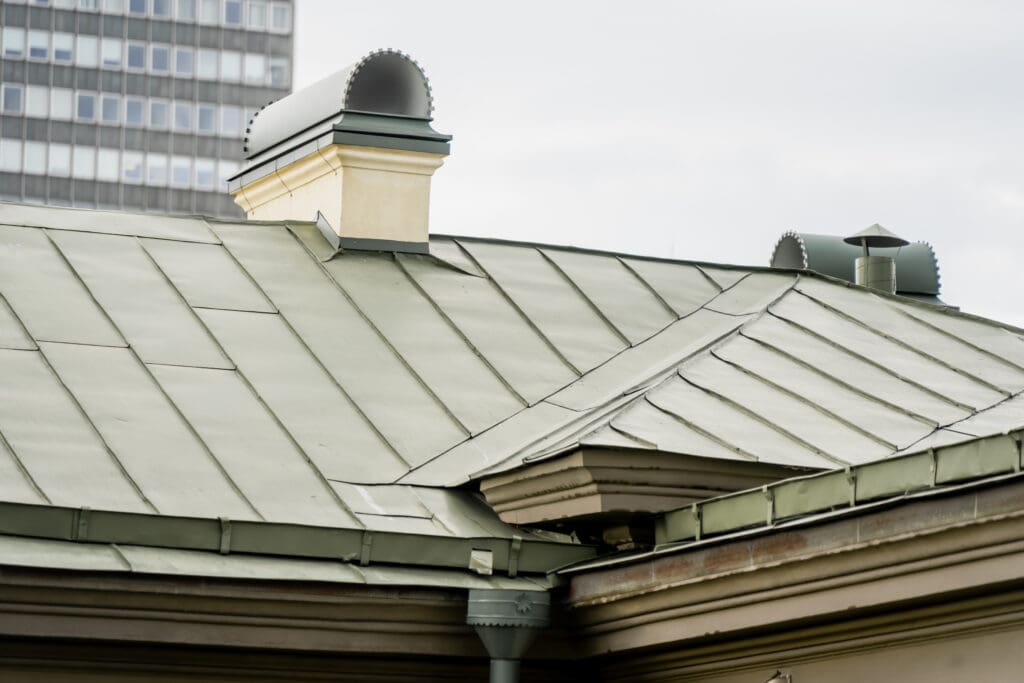
Understanding how standing seam compares to the systems most commonly specified for commercial roofing helps property owners frame the upgrade decision with accurate expectations about cost, performance, and trade-offs.
| Feature | Standing Seam Metal | TPO Single-Ply | Exposed Fastener Metal |
| Typical service life | 40 to 60 years | 15 to 25 years | 20 to 30 years |
| Fastener exposure | None | Seam welds | Through panel face |
| Thermal movement | Free-floating clip design | Membrane absorbs movement | Stress at each fastener |
| Maintenance frequency | Low | Moderate | Moderate to high |
| Solar integration | Clamp-on, no penetrations | Ballasted or penetrating | Limited |
| Installed cost | Higher upfront | Lower upfront | Moderate upfront |
| Lifecycle cost | Favorable at 40-plus years | Higher due to replacement frequency | Moderate |
The upfront cost of standing seam is higher than most competing systems on a per-square-foot basis. That cost premium is real, and it is the primary reason some property owners default to single-ply alternatives for commercial roof replacements. What the upfront comparison obscures is the lifecycle cost picture, where standing seam’s 40-plus year service life and low maintenance requirements shift the economics significantly in its favor when total cost of ownership over a 40-year horizon is the measure.
Make the Upgrade Decision With Full Information
A standing seam roof upgrade is a capital investment that changes your building’s roofing economics for the next four to six decades. It is not the right answer for every building or every budget, but for commercial property owners with a long-term ownership horizon, adequate structural capacity, and a desire to reduce the ongoing maintenance and replacement cycle costs of membrane roofing, it deserves serious evaluation alongside every other option on the table.
Weathertite Solutions works with commercial property owners and facility managers across Pennsylvania and surrounding areas to assess whether standing seam is the right fit for a specific building, specify the appropriate system for the application and budget, and install it with the technical precision that a 40-plus year system demands. Whether you are planning a near-term roof replacement or beginning the evaluation process well in advance, we give you the information your building’s next roofing decision deserves. Contact us today to schedule a consultation and find out whether upgrading to standing seam roof panels is the right move for your commercial property.