
A built up roof is a flat or low slope roofing system made from alternating layers of bitumen and reinforcing ply sheets, finished with a protective surface. Commercial building owners across New Jersey, Pennsylvania, and New York pick it because each layer backs up the one above it. If you’re comparing commercial roofing options, this guide explains how BUR is built and where it outperforms single ply systems.
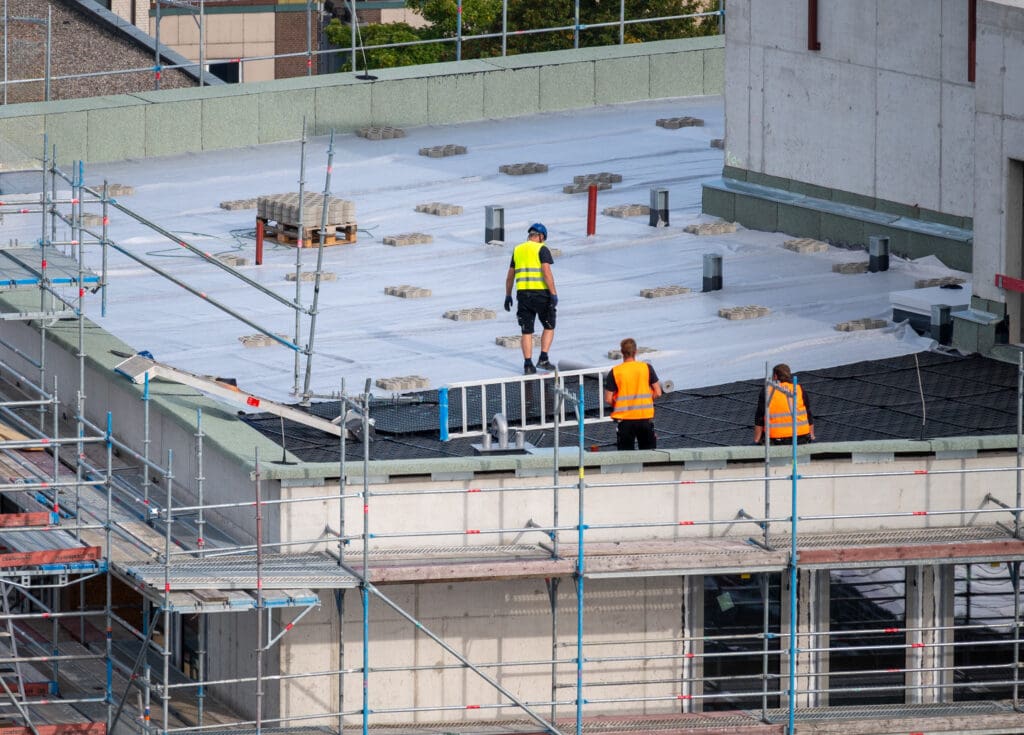
What Is a Built Up Roof?
A built up roof, often called a BUR roof, is a multi ply membrane assembled on site. Crews alternate layers of asphalt with reinforcing felts until the roof reaches the specified number of plies, then cap it with gravel, a mineral surfaced cap sheet, or a reflective coating.
BUR has been used on commercial roofs in the United States for more than 100 years, according to GAF. You’ll still find it on warehouses, schools, churches, and office buildings where durability and redundancy matter.
Layers of a Built Up Roof System
A built up roof is a set of layers that work together, and each one does a specific job. From the structural deck up to the surfacing, these layers keep water out, help control the building’s temperature, and protect the membrane from weather and foot traffic. Here’s what goes into a typical BUR assembly.
1. Roof Deck
The roof deck is the structural base of the whole system, usually steel, concrete, or wood. It has to be sound, dry, and strong enough to carry a multi layer membrane. Any damaged or deteriorated decking is repaired before installation starts.
2. Vapor Retarder
In conditioned buildings, a vapor retarder keeps interior moisture from rising into the insulation. Without it, condensation can saturate the insulation and shorten the roof’s service life.
3. Insulation and Cover Board
Rigid insulation boards improve energy efficiency and give the membrane a flat, even surface. A cover board goes on top to protect the insulation and give the plies a solid surface to bond to.
4. Base Sheet
The base sheet is the first waterproofing layer. It’s usually fastened mechanically over the insulation or cover board.
5. Ply Sheets and Bitumen
Reinforcing ply sheets of fiberglass or organic felt are laid in alternating layers with hot asphalt or cold applied adhesive. Each ply adds another waterproof barrier.
5. Surfacing
The top layer protects the membrane from UV exposure, weather, and foot traffic. Common options are gravel set in a flood coat of asphalt, a mineral surfaced cap sheet, or a white reflective cap sheet.
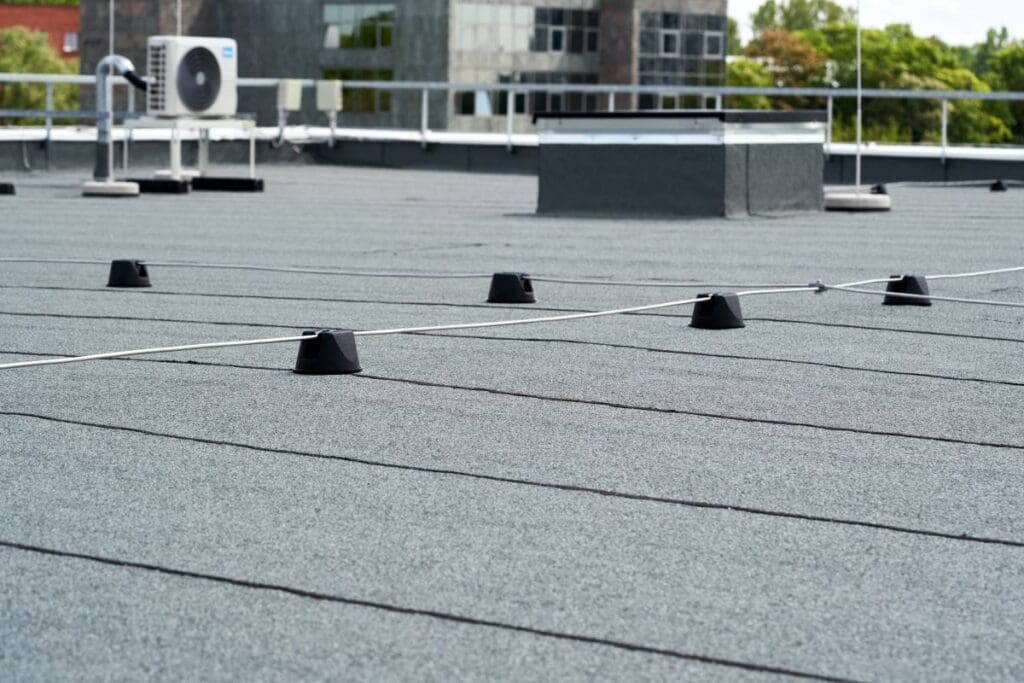
3 Ply vs 4 Ply Built Up Roofs
Ply count is the number of reinforcing layers in the membrane. A 3 ply system is lighter and costs less to install. A 4 ply built up roof adds another full layer of waterproofing, and that layer can extend service life on roofs with heavy traffic or ponding risk.
The right ply count depends on the building’s use, the roof’s slope and drainage, and the manufacturer’s warranty requirements. An evaluation of the existing structure shows which option fits.
Built Up Roof Details That Prevent Leaks
Most BUR leaks start at transitions, not in the open field of the roof. These details need the most attention during installation:
- Drains and scuppers: Sump the membrane into the drain and flash it so water leaves the roof instead of collecting around the opening.
- Perimeter edges: Install metal edge flashing that’s stripped in with membrane plies to resist wind uplift.
- Curbs and penetrations: Wrap HVAC curbs, pipes, and vents with base flashing that runs up the vertical surface and ties into the field plies.
- Parapet walls: Turn the base flashing up the wall and finish it with counterflashing or coping to keep water out from behind.
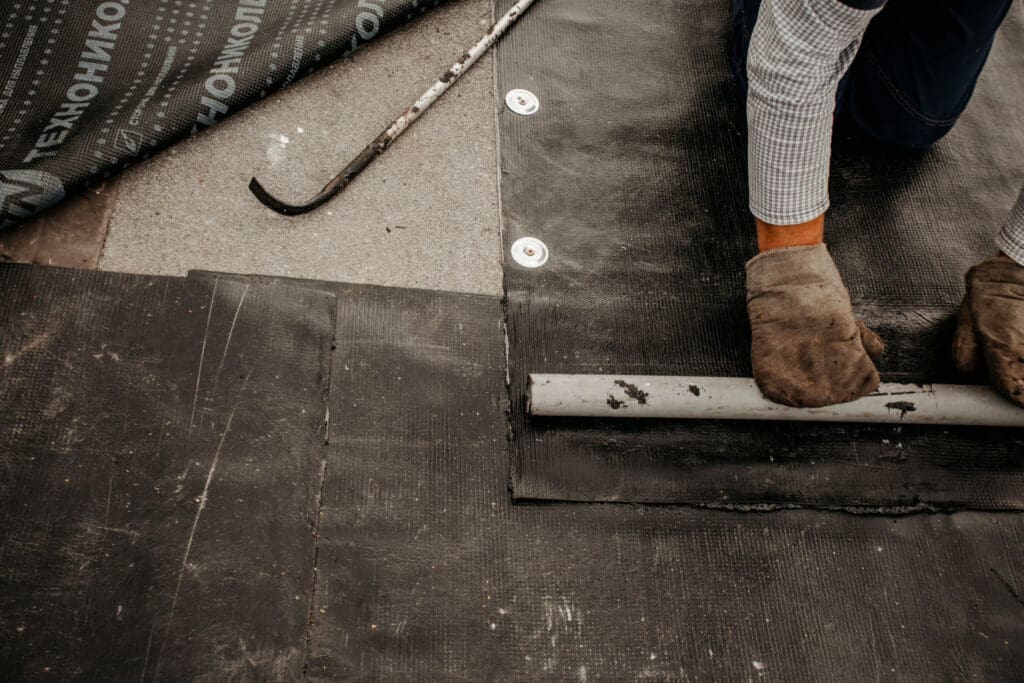
Advantages of a Built Up Roof System
Redundant Waterproofing
Every ply is its own barrier. If the top surface is damaged, the layers below keep protecting the building.
Durability Under Foot Traffic
The thick, multi layer membrane holds up well on roofs that get regular visits from HVAC technicians and maintenance crews.
Proven Track Record
BUR has been installed and refined over decades, so material behavior and installation methods are well understood. GAF offers BUR system warranties of up to 20 years, depending on the materials and system specified.
Reflective Surfacing Options
White coated cap sheets reflect sunlight. That can help lower rooftop temperatures and reduce cooling demand inside the building.
Drawbacks to Consider
- Weight: Multiple plies plus gravel surfacing add load. Your deck should be evaluated before installation.
- Installation time: Building the membrane layer by layer takes more labor than single ply systems.
- Fumes and odor: Hot asphalt applications produce odor during installation. Cold applied systems reduce this.
- Upfront cost: More materials and labor can mean a higher initial investment than some single ply options.
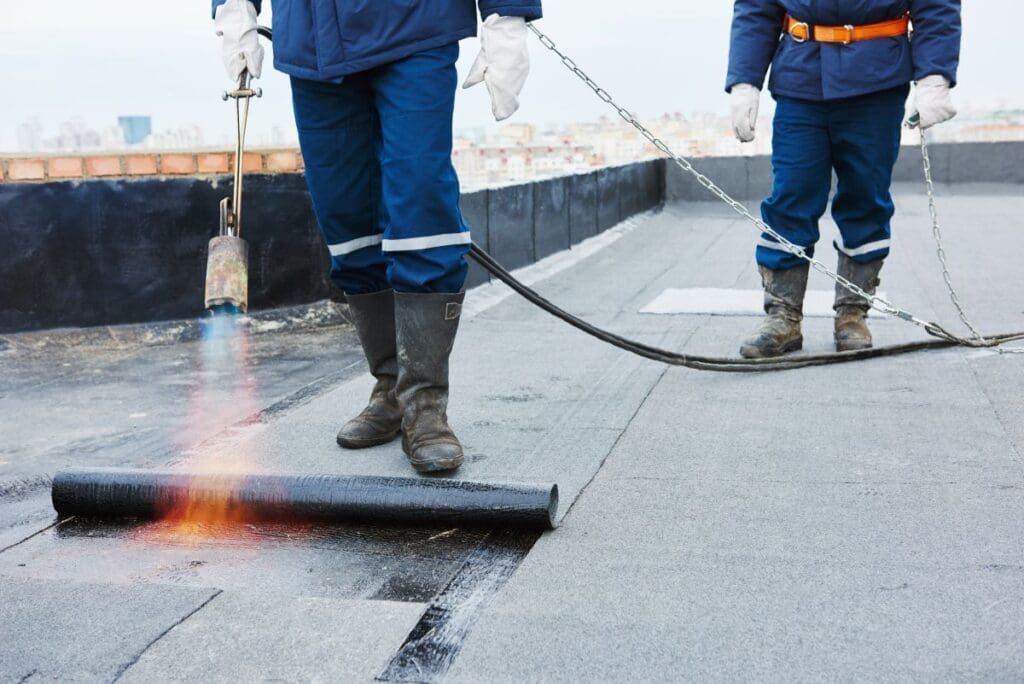
Built Up Roof vs TPO vs EPDM
| Feature | Built Up Roof | TPO | EPDM |
|---|---|---|---|
| Membrane layers | Multiple plies | Single ply | Single ply |
| Seams | Plies overlap and bond in bitumen | Heat welded | Adhered with tape or adhesive |
| Foot traffic resistance | High | Moderate | Moderate |
| UV protection | Gravel or cap sheet surfacing | Reflective white membrane | Black membrane, can be coated |
| Installation speed | Slower | Faster | Faster |
| Weight | Heavier | Lightweight | Lightweight |
TPO and EPDM install faster and weigh less, and that makes them a good fit for many buildings. BUR is often chosen where redundancy, puncture resistance, and heavy traffic matter more than install speed. See how each system performs on the commercial roofing services page.
Steps in Installing a Built-Up Roof
Knowing what to expect can help property owners in Morristown and surrounding areas plan for a successful project:
1. Evaluation and Tear-Off
The existing roof is assessed and removed down to the deck where needed.
2. Substrate Preparation
The deck is repaired, then the vapor retarder, insulation, and cover board are installed.
3. Base sheet and plies
The base sheet goes down first, followed by alternating ply sheets and bitumen until the specified ply count is reached.
4. Flashing and details
Drains, edges, curbs, and walls are flashed and tied into the membrane.
5. Surfacing and final review
Gravel, a cap sheet, or a coating is applied, and the roof is reviewed before closeout.
Maintaining a Built Up Roof
Proper care is essential for getting the most out of your investment. Here’s how Morristown and surrounding areas owners can maximize longevity:
- Schedule a professional roof evaluation twice a year and after major storms.
- Keep drains, gutters, and scuppers clear so water doesn’t pond.
- Repair blisters, splits, and loose gravel early, before water reaches the plies.
- Check flashing at walls, curbs, and penetrations for separation.
- Keep a record of every repair and evaluation to support warranty claims.
Is a Built Up Roof Right for Your Building?
BUR fits buildings with frequent rooftop traffic, structures that can carry the extra weight, and owners who want layered protection. If your deck has load limits or you need a faster installation, a single ply system may be the better choice. A roof evaluation answers that for your specific building.
Choosing a Built Up Roofing Contractor
Look for a contractor with commercial BUR experience, manufacturer certification, and a clear warranty. Weathertite Solutions is a GAF Master Elite contractor serving commercial properties in New Jersey, Pennsylvania, and New York. Our team installs, repairs, and maintains built up roof systems along with TPO, EPDM, and other low slope options. Learn more about commercial roof replacement.
Schedule a Built Up Roof Evaluation
Planning a new roof or seeing wear on an existing BUR system? Contact Weathertite Solutions to schedule a commercial roof evaluation.
Built Up Roof FAQs
What is a BUR roof system?
A BUR roof system is a flat roof membrane made of alternating layers of bitumen and reinforcing ply sheets, topped with gravel, a cap sheet, or a coating.
How many layers does a built up roof have?
Most built up roofs have 3 or 4 plies over a base sheet, plus insulation and a surfacing layer. A 4 ply system is a common commercial specification.
How long does a built up roof last?
Service life depends on ply count, surfacing, drainage, and maintenance. GAF offers BUR system warranties of up to 20 years, depending on the materials used.
Is built up roofing better than TPO?
Neither is better for every building. BUR offers more layers and stronger foot traffic resistance, while TPO is lighter and faster to install.