
When it comes to flat and low-slope commercial roofing, few systems have proven themselves over a longer period than built-up roofing. Decades of real-world performance across warehouses, office buildings, and industrial facilities make it one of the most trusted options available. A built up roofing system earns that trust through genuine structural advantages that newer single-ply membranes are still working to match. If you are evaluating roofing options for your building, understanding how different systems perform under real commercial conditions will help you make a decision you can stand behind for decades.
Here’s what you’ll learn in this guide:
- What a built up roofing system is and how it is constructed
- The key advantages that make it a competitive choice for commercial buildings
- How BUR performs against modern single-ply membrane alternatives
- What maintenance a built up roof requires to reach its full service life
- How to determine whether BUR is the right fit for your building and budget
What Sets a Built Up Roofing System Apart
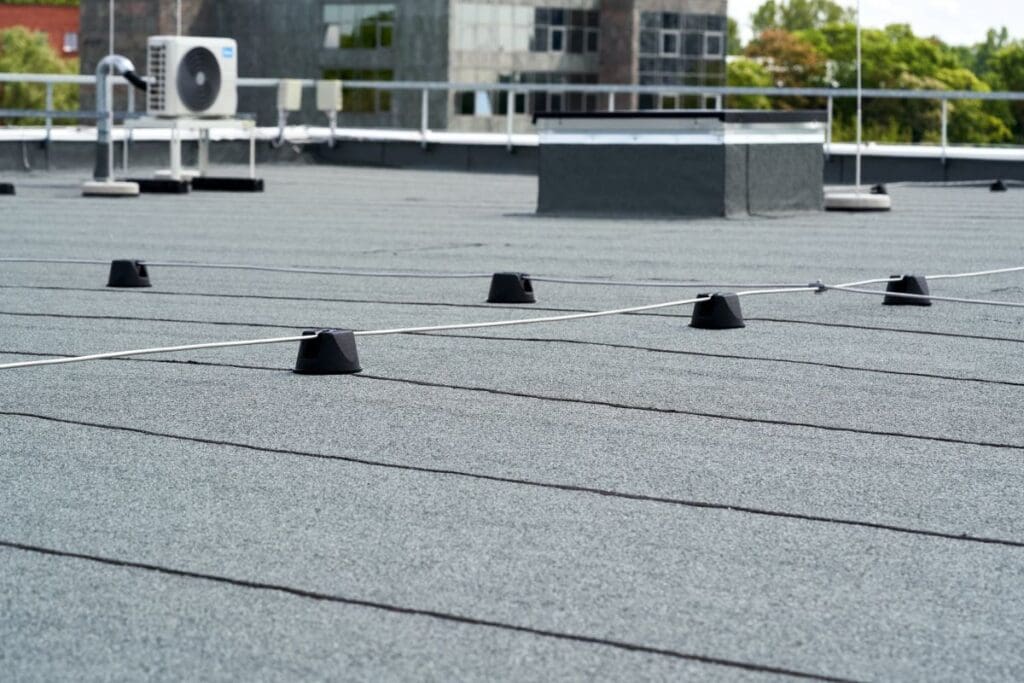
Built up roofing, commonly referred to as BUR, is one of the oldest and most field-tested commercial roofing systems in existence. It has been specified on commercial buildings across Pennsylvania and surrounding areas for well over a century, and its continued relevance in modern commercial construction is not inertia. It is a reflection of genuine performance advantages that hold up under scrutiny. BUR consists of multiple alternating layers of bitumen and reinforcing fabric, topped with a surface layer of aggregate, mineral cap sheet, or reflective coating. That layered construction is the source of most of its advantages.
Unlike single-ply systems that rely on a single membrane layer for all waterproofing performance, a built up roofing system distributes that responsibility across multiple redundant layers. When one layer is compromised, the layers beneath it continue to perform. That redundancy is what gives BUR its reputation for durability and its resistance to the kind of single-point failures that plague thinner membrane systems.
- Redundant waterproofing layers: Each ply of reinforcing fabric and bitumen adds an independent layer of water resistance. A puncture or surface crack that would admit water immediately on a single-ply system may not penetrate all the way through a properly installed BUR assembly.
- Long proven service life: Well-maintained built up roofing systems routinely perform for 20 to 30 years, with some installations exceeding that range significantly. That track record is documented across real buildings in real climates, not just laboratory testing.
- Superior resistance to foot traffic: The multi-ply construction and aggregate surface of a BUR system handle rooftop foot traffic far better than most single-ply membranes. For buildings with regular rooftop equipment access, this is a meaningful practical advantage.
- Excellent UV and heat resistance: The aggregate ballast or mineral surface on a built up roof reflects solar radiation and protects the underlying bitumen layers from UV degradation. This surface protection contributes directly to the system’s longevity.
- Strong wind uplift resistance: The mass and adhesion of a fully adhered BUR assembly provides excellent resistance to wind uplift, which is a critical performance factor for commercial buildings across Pennsylvania and surrounding areas exposed to significant storm events.
4 Key Advantages Of A Built Up Roofing System For Buildings
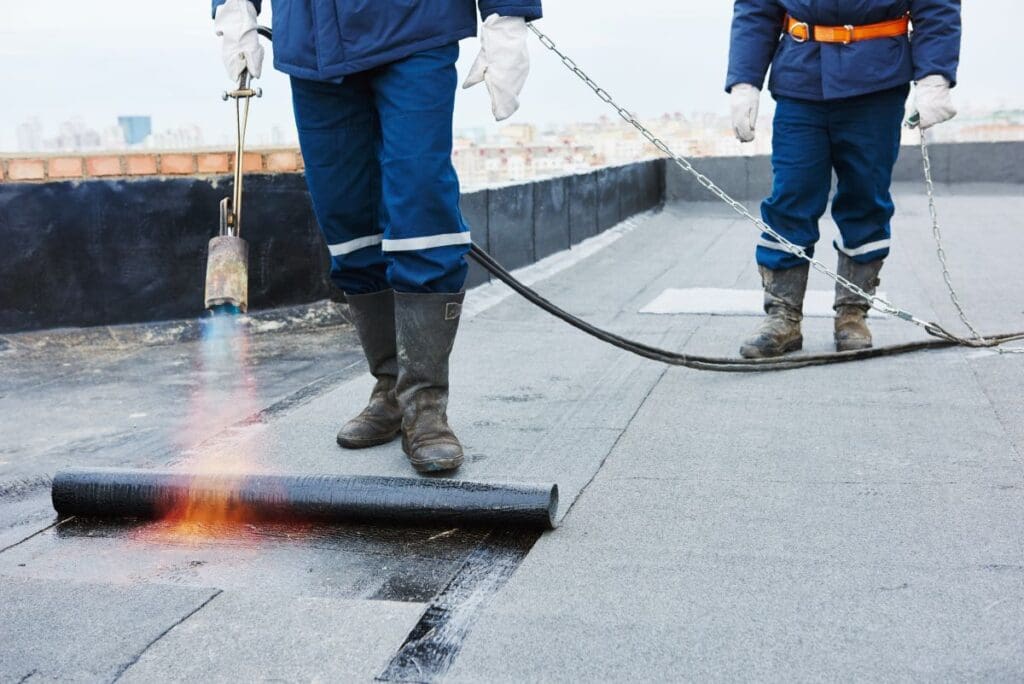
The advantages of BUR are not abstract. They translate directly into building performance, occupant protection, and long-term financial outcomes for property owners and facility managers. Here is a detailed look at the most significant advantages this system delivers.
1. Multiple Redundant Layers of Waterproofing Protection
The defining structural feature of a built up roofing system is its layered assembly. Where a single-ply membrane is one layer of material standing between weather and the building interior, a BUR system is typically three to five plies of reinforcing fabric embedded in bitumen, each one an independent waterproofing barrier. This redundancy means the system can absorb localized damage without immediate failure, and it gives maintenance inspections more opportunity to catch problems before they result in interior water intrusion.
- Standard commercial BUR assemblies use three to five plies, with heavier-use applications sometimes specifying additional plies for enhanced protection
- Each ply is offset from the one beneath it, ensuring that no seam or joint in one layer aligns with a seam in the layer above or below
- The redundant construction effectively creates a self-healing capacity: minor surface damage that might compromise a single-ply system is contained by the plies beneath it
2. Exceptional Durability Under Heavy Foot Traffic
Rooftop equipment access is a reality on virtually every commercial building. HVAC systems, communications equipment, solar installations, and mechanical systems all require regular service visits, and those visits put mechanical stress on the roofing membrane that accumulates over years. Built up roofing handles that stress better than any single-ply alternative because of the thickness, mass, and surface protection of its multi-layer construction.
- The aggregate surface layer on a gravel-surfaced BUR system distributes point loads from foot traffic across a wider membrane area, reducing the stress concentration that causes punctures
- Where walkway pads are installed on single-ply systems to protect against traffic damage, a BUR system often requires less supplemental protection in moderate-traffic zones
- The mass and thickness of BUR construction also provides better resistance to physical impact from dropped tools and equipment during rooftop service work
3. Proven Long-Term Performance and Lifespan
A built up roofing system installed correctly on a well-prepared substrate and maintained on a regular schedule is one of the longest-performing commercial roofing systems available. Service lives of 20 to 30 years are the norm, and buildings across Pennsylvania and surrounding areas with older BUR installations that received consistent maintenance have documented performance well beyond that range.
- Longevity is tied directly to installation quality, substrate condition, and maintenance consistency; a properly maintained BUR system does not have the formulation variability concerns that have affected some single-ply products over the years
- The materials used in BUR construction are mature and well-understood, with decades of field data supporting performance expectations
- Long service life translates directly into lower lifecycle cost, as the interval between major capital expenditures for roof replacement is extended
4. Thermal Mass and Energy Performance Benefits
The mass of a built up roofing system contributes to building thermal performance in ways that thin single-ply membranes cannot match. The multiple bitumen and fabric layers, combined with aggregate ballast where used, create a thermal mass effect that moderates temperature swings at the roof deck level. This reduces the rate of heat transfer into the building during summer months and slows heat loss during winter, contributing to more stable interior temperatures and reduced HVAC demand.
- Thermal mass effects are most pronounced in climates with significant day-to-night temperature variation, which is characteristic of much of Pennsylvania and surrounding areas through spring and fall
- Reflective cap sheets and coatings can be specified over BUR assemblies to add cool-roof reflectivity to the thermal mass benefit
- The combined effect of thermal mass and reflective surface treatment can produce measurable energy savings on large commercial buildings with significant roof surface area
How Built Up Roofing Performs Against Modern Single-Ply Systems
The commercial roofing market has seen significant growth in single-ply membrane adoption over the past three decades. TPO and EPDM now account for a large share of new commercial roof installations. Understanding how BUR stacks up against these systems helps property owners make an informed choice rather than defaulting to whichever system a contractor happens to prefer.
BUR vs. TPO
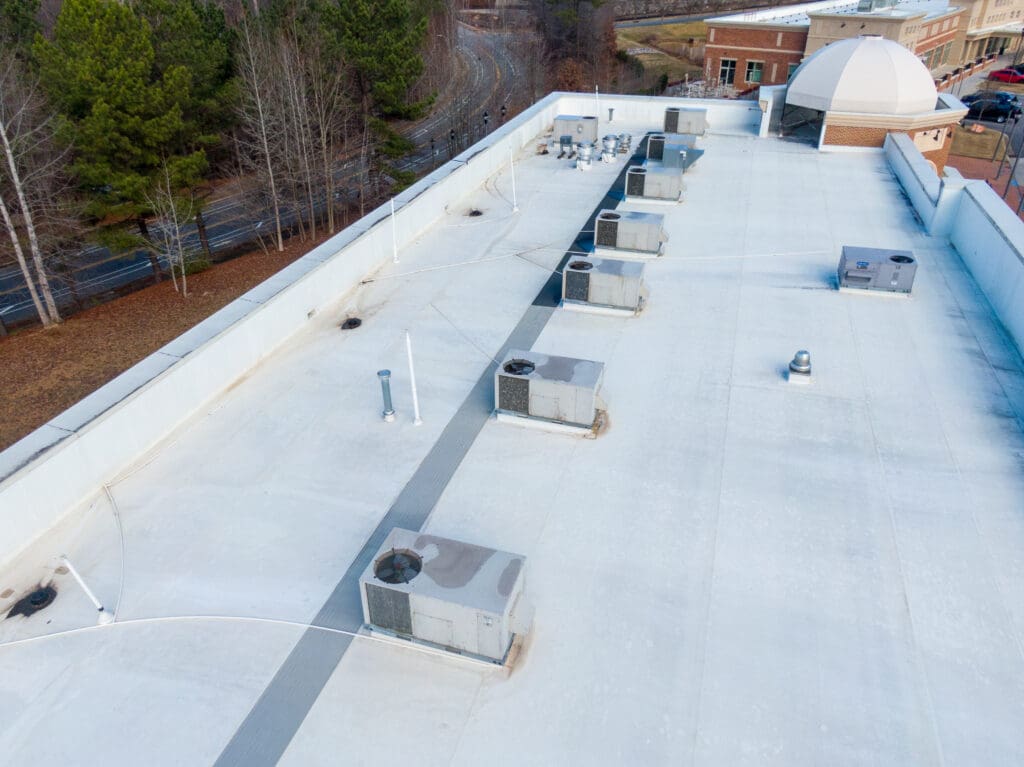
TPO offers a white reflective surface, heat-welded seams, and a lower installed cost than BUR on most projects. It is a legitimate performer when properly installed. However, TPO is a single-layer system, and seam quality is critical to performance in a way that BUR’s redundant construction avoids. TPO formulations have also changed significantly over the product’s history, creating variability in long-term field performance across different manufacturers and generations of material.
BUR vs. EPDM
EPDM is a proven single-ply system with a long track record, particularly on low-slope commercial roofs. Its adhesive seams are historically the most common failure point in EPDM installations, as they rely on contact adhesive that ages and loses bond strength over time. BUR’s layered construction eliminates the seam adhesion vulnerability that affects all adhesive-seamed EPDM systems.
| Feature | Built Up Roofing (BUR) | TPO | EPDM |
| Number of waterproofing layers | 3 to 5 | 1 | 1 |
| Seam method | Fully embedded in bitumen | Heat-welded | Adhesive or tape |
| Foot traffic resistance | Excellent | Moderate | Moderate |
| Typical service life | 20 to 30 years | 15 to 25 years | 20 to 30 years |
| UV surface protection | Aggregate or mineral cap sheet | Inherent to white membrane | Coating required for white |
| Installed cost | Moderate to higher | Moderate | Moderate |
BUR Installation and Maintenance To Maximize Service Life
A BUR system’s longevity advantage is realized only when the system receives appropriate maintenance over its service life. The good news is that BUR maintenance is straightforward and well understood, with decades of best-practice documentation available to guide inspection and repair protocols.
- Bi-annual professional inspections: Spring and fall inspection visits address seasonal damage and prepare the system for the next weather cycle. For commercial buildings in New York and surrounding areas, the fall inspection is especially important given the snow and ice loads the system will carry through winter.
- Drain and scupper clearing: Aggregate-surfaced BUR systems are particularly susceptible to drain blockage as gravel migrates toward outlets over time. Regular clearing prevents the ponding water that accelerates bitumen degradation and adds structural load.
- Surface inspection and spot repairs: Individual blisters, surface cracks, and areas of aggregate loss should be identified and addressed during maintenance visits rather than deferred to the next inspection cycle.
- Flashing maintenance: Base flashings at parapet walls, penetrations, and curbs are the most maintenance-sensitive component of any BUR system. Regular inspection and prompt repair of lifting or cracked flashing prevents the vast majority of BUR leak events.
- Documentation and record keeping: Maintaining a dated photo and written record of each inspection and repair visit supports warranty claims, insurance claims, and capital planning for eventual replacement.
A Proven System That Continues to Deliver
Built up roofing has outlasted roofing trends and technology cycles for over a century because it works. Its redundant construction, resistance to traffic and impact, long service life, and compatibility with a wide range of building types make it a genuinely competitive choice against modern single-ply alternatives, not just a legacy option carried forward by habit.
Weathertite Solutions works with commercial property owners and facility managers across New York and surrounding areas to specify, install, and maintain built up roofing systems that deliver the performance and longevity the system is designed to provide. Whether you are evaluating BUR for a new installation, considering it for a replacement project, or managing an existing system that needs professional attention, we bring the knowledge and experience the job requires. Contact us today to schedule a consultation and find out whether a built up roofing system is the right choice for your building.