
TPO has become one of the most widely installed commercial roofing membranes for good reason. It offers excellent energy efficiency, strong seam strength, and competitive cost. But even a high-quality TPO system will underperform without consistent care. TPO roofing maintenance is what separates a membrane that reaches its full 20-plus year potential from one that develops chronic seam failures and pooling issues within a decade. If your system is already showing early warning signs, having someone take a professional look at the membrane before problems compound is always the right starting point.
Here’s what you’ll learn in this guide:
- Why consistent maintenance is essential to TPO membrane longevity
- Seven expert maintenance tips that directly extend system performance
- What TPO-specific failure points to monitor between professional visits
- How seasonal conditions in the Northeast affect TPO care priorities
- What a professional TPO maintenance visit covers and how to evaluate one
What Makes TPO Worth Protecting
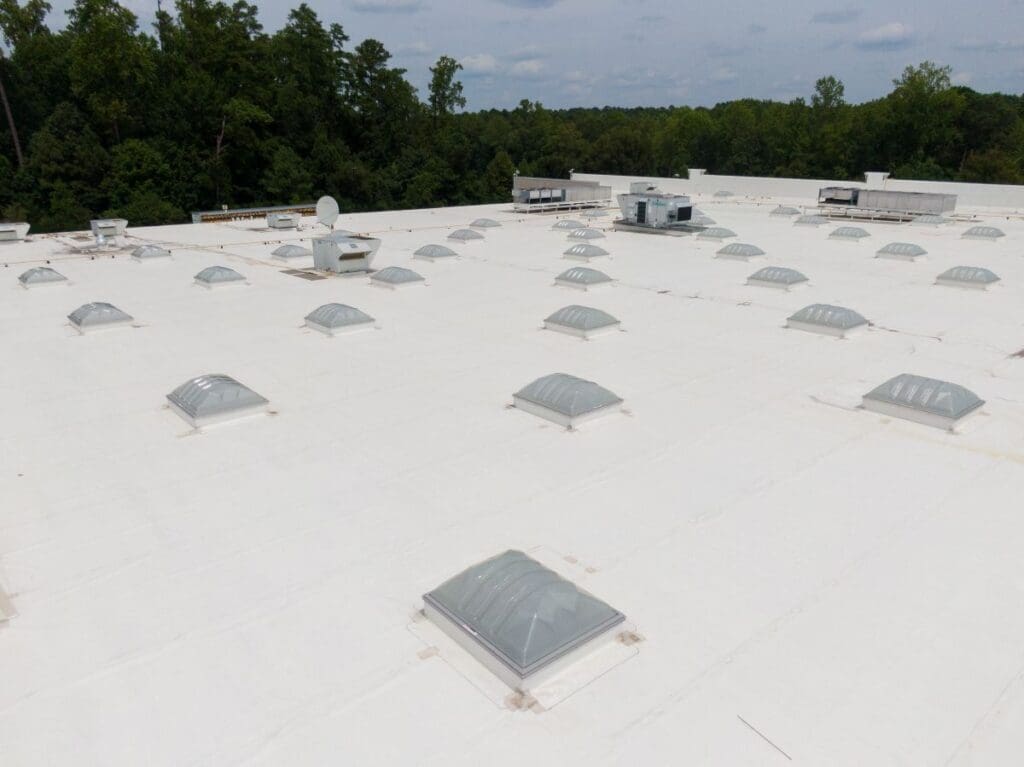
TPO roofing systems deliver real value when properly maintained. Across Pennsylvania and surrounding areas,they are the membrane of choice for warehouses, office buildings, retail centers, and healthcare facilities because of their reflectivity, heat-weld seam strength, and resistance to UV degradation. That value, however, is not self-sustaining. TPO membranes are sensitive to seam separation, puncture damage, and ponding water in ways that require active management to prevent premature failure.
The financial case for consistent maintenance is straightforward. Here is what a well-maintained TPO system delivers compared to one managed reactively:
- Extended membrane life: TPO systems maintained on a regular schedule consistently outlast those managed only when visible problems appear. The difference can be five to ten years of additional service life, which directly delays full replacement costs.
- Preserved seam integrity: Heat-welded TPO seams are the strongest part of the system when new, but they degrade under UV exposure, thermal movement, and chemical contamination over time. Regular inspection keeps seam condition in view before separation occurs.
- Energy performance retention: TPO’s white reflective surface reduces cooling loads significantly. Dirt accumulation and surface chalking reduce that reflectivity. Regular cleaning and surface maintenance preserve the energy efficiency the system was specified to deliver.
- Warranty protection: Most TPO manufacturer warranties require documented maintenance at defined intervals. Failing to maintain the system as specified gives manufacturers grounds to deny claims for membrane defects.
- Lower total lifecycle cost: Routine maintenance costs a fraction of what emergency repairs and premature replacement run. Every dollar invested in proactive care returns multiples in deferred capital expenditure.
5 Expert TPO Roofing Maintenance Tips For Durability
Maintaining a TPO system well requires more than an annual walk-around. Each of these practices targets a specific vulnerability in the system and is grounded in how TPO membranes actually age and fail under real-world conditions.
1. Schedule Bi-Annual Professional Inspections
The foundation of any TPO roofing maintenance program is a professional inspection conducted at minimum twice per year. Spring inspections assess damage from freeze-thaw cycling and winter weather load. Fall inspections prepare the system for cold-weather stress and ensure drainage is clear heading into the wet season. For commercial properties across Pennsylvania and surrounding areas, this twice-annual rhythm is a practical baseline that prevents the most common TPO failure modes from developing undetected.
- Spring visits should include seam probing, drain clearing, and membrane surface assessment for winter damage
- Fall visits should focus on drain and scupper clearing, flashing condition at all penetrations, and surface debris removal before leaf season peaks
- Inspections should be documented with photos and written condition reports for warranty and capital planning purposes
2. Keep the Membrane Surface Clean
TPO membrane surfaces accumulate dirt, biological growth, and residue from HVAC condensate and rooftop mechanical equipment over time. That accumulation does more than affect reflectivity. Biological growth retains moisture against the membrane surface and can accelerate surface degradation, while chemical residues from HVAC units and industrial exhaust can attack TPO chemistry directly.
- Wash the membrane surface with a mild, pH-neutral cleaner and low-pressure water annually or as needed when significant contamination is present
- Never use petroleum-based solvents, harsh degreasers, or pressure washers set above manufacturer-recommended pressure, as these damage TPO surface chemistry
- Pay particular attention to areas beneath HVAC discharge points and near rooftop kitchen exhaust, where chemical and grease contamination is most concentrated
3. Inspect and Maintain All Seams Proactively
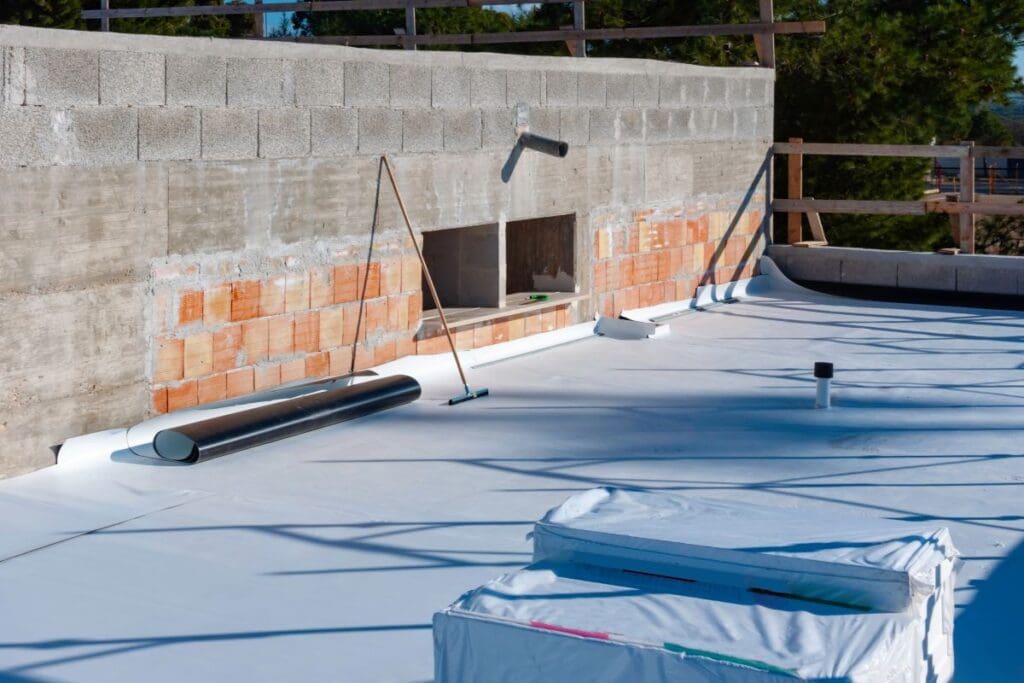
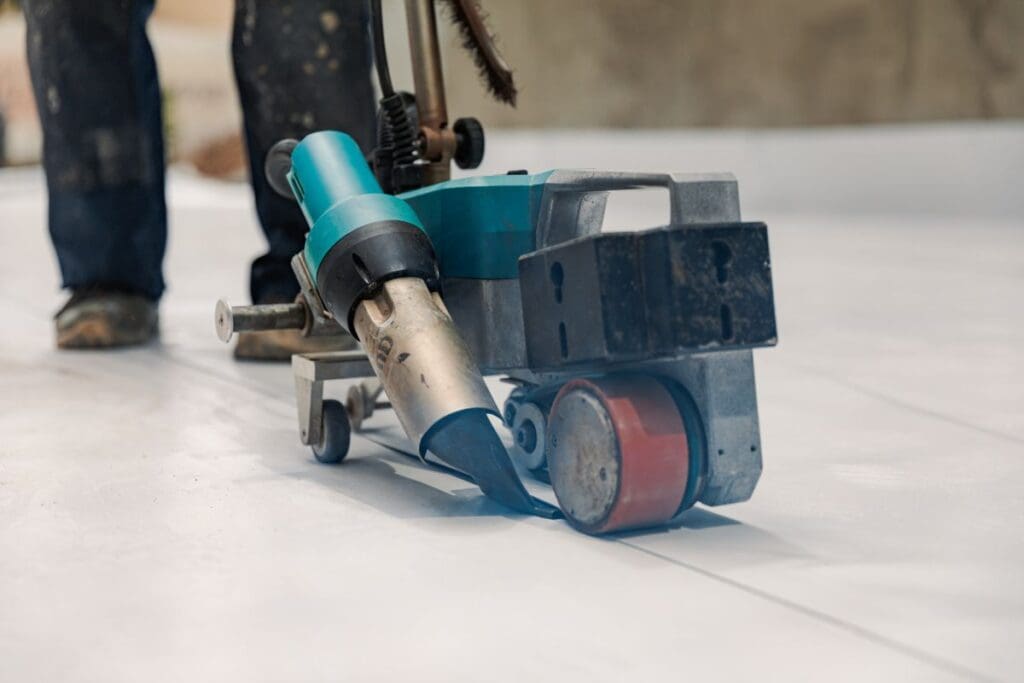
Heat-welded seams are TPO’s primary defense against water infiltration, but they are also the most common location for long-term failures. Seams that were welded correctly during installation can still develop issues over years of UV exposure and thermal cycling. A seam that is beginning to separate from one edge is far cheaper and simpler to address than one that has fully opened and allowed moisture into the insulation below.
- Seam probing during professional inspections involves applying pressure to seam edges to identify areas where adhesion is weakening
- Any seam showing edge lift, surface cracking, or visible separation should be addressed immediately with compatible TPO seam repair material
- Lap seams at membrane edges and around penetration flashings deserve particular attention, as these are geometrically more complex and experience more movement stress
4. Address Ponding Water Promptly
TPO membranes tolerate standing water better than some roofing materials, but chronic ponding is still a serious maintenance concern. Water that pools and remains for more than 48 hours after rainfall indicates a drainage problem that will accelerate membrane degradation, add structural load, and create conditions favorable to biological growth on the membrane surface.
- Clear all primary and secondary drains, scuppers, and gutters during every maintenance visit and after any major storm event
- If ponding water appears in locations where it did not previously collect, investigate whether the roof structure has deflected or whether membrane installation at that area has shifted
- Tapered insulation additions are sometimes the correct long-term solution for chronic ponding zones where drainage configuration cannot fully resolve the issue
5. Protect the Membrane From Mechanical Damage
TPO membrane surfaces are durable but not impervious to physical damage from rooftop activity. HVAC technicians, communications installers, solar contractors, and other trades access commercial roofs regularly, and every unnecessary footstep or dragged tool creates risk. Punctures and surface abrasions that go unnoticed can admit water for months before showing up as interior damage.
- Install TPO walkway pads in all high-traffic areas, particularly paths between rooftop access points and mechanical equipment
- Establish and communicate clear rooftop access protocols for all trades working on your building
- After any rooftop contractor visit, schedule a follow-up inspection of the membrane in areas where work was performed
TPO Failure Patterns Specific to the Northeast Climate
Climate is not a generic factor in TPO maintenance. The specific weather patterns across Pennsylvania and surrounding areas create predictable stress cycles on TPO systems that a well-designed maintenance program directly accounts for.
- Freeze-thaw seam stress: Temperature swings across freezing cause TPO membranes to expand and contract repeatedly through winter. Seams and flashing terminations absorb the most movement stress and should always be prioritized in spring inspections.
- Summer UV intensity: TPO white membrane surfaces reflect solar radiation effectively when clean, but prolonged summer UV exposure degrades surface chemistry over years. Surface chalking, stiffening, and reduced flexibility are long-term UV effects that maintenance slows but cannot entirely prevent.
- Wind uplift at perimeter edges: Northeast wind events, particularly fall and winter storms, create uplift pressure at membrane edges and seams. Perimeter fastening and edge flashing condition should be checked after any significant wind event.
- Biological growth from spring moisture: Wet spring conditions encourage algae and mold growth on TPO surfaces, particularly in shaded areas and near drainage outlets where moisture lingers. Spring cleaning visits address this before growth becomes established.
Comparing TPO Maintenance to Other Commercial Membrane Systems
Property owners managing multiple buildings or considering a roofing system replacement sometimes ask how TPO maintenance requirements compare to other common commercial membranes. The honest answer is that all membrane systems require maintenance, and the differences are more about what to monitor than how much effort is involved.
| Membrane Type | Primary Maintenance Focus | Seam Type | UV Sensitivity |
| TPO | Seam integrity, surface cleanliness, drainage | Heat-welded | Moderate; white surface reflects UV |
| EPDM | Lap seam adhesive, surface coating if applicable | Adhesive or tape | Low inherent sensitivity; dark surface absorbs heat |
| Modified Bitumen | Surface granule integrity, flashing adhesion | Torch or cold-applied | Moderate; granule surface protects underlying asphalt |
| PVC | Seam integrity, plasticizer migration over time | Heat-welded | Low; inherently UV stable |
TPO sits in a favorable position for commercial property owners who want strong seam performance, energy efficiency, and reasonable maintenance requirements relative to other systems. The key is treating that maintenance as a scheduled commitment rather than a reactive response to visible problems.
Keep Your TPO Roof Performing Year After Year
A TPO membrane that is properly maintained is one of the best long-term investments in a commercial building envelope. One that is neglected deteriorates faster than most property owners expect, and the repair costs that follow an ignored maintenance schedule almost always exceed what consistent care would have cost over the same period.
Weathertite Solutions works with commercial property owners and facility managers across Pennsylvania and surrounding areas to develop and execute TPO roofing maintenance programs that match each building’s system type, age, and performance history. Whether you need a baseline inspection to understand where your current TPO system stands, or a long-term maintenance partner who will keep it performing reliably for years to come, we are ready to help. Contact us today to schedule your TPO inspection and build a maintenance plan that protects your investment.