
A commercial roof can have a flawless membrane and still leak constantly if the flashing is wrong. Every edge, penetration, and transition on a metal roof depends on correctly specified and installed flashing to stay watertight. Metal roof flashing is the system of shaped metal pieces that bridges those critical gaps, and when it fails, water finds a way in regardless of how good the panels around it are. If you are already dealing with leak points at transitions or penetrations, getting a qualified contractor to assess those details before they worsen is always the right move.
Here’s what you’ll learn in this guide:
- The primary metal roof flashing types used on commercial buildings and where each one goes
- Why flashing is the most leak-prone part of any metal roofing system
- Five installation tips that separate quality flashing work from shortcuts that fail
- How to spot flashing problems during a basic roof inspection
- What to ask a contractor before approving any flashing work on your building
The Role Flashing Plays in Commercial Metal Roof Performance
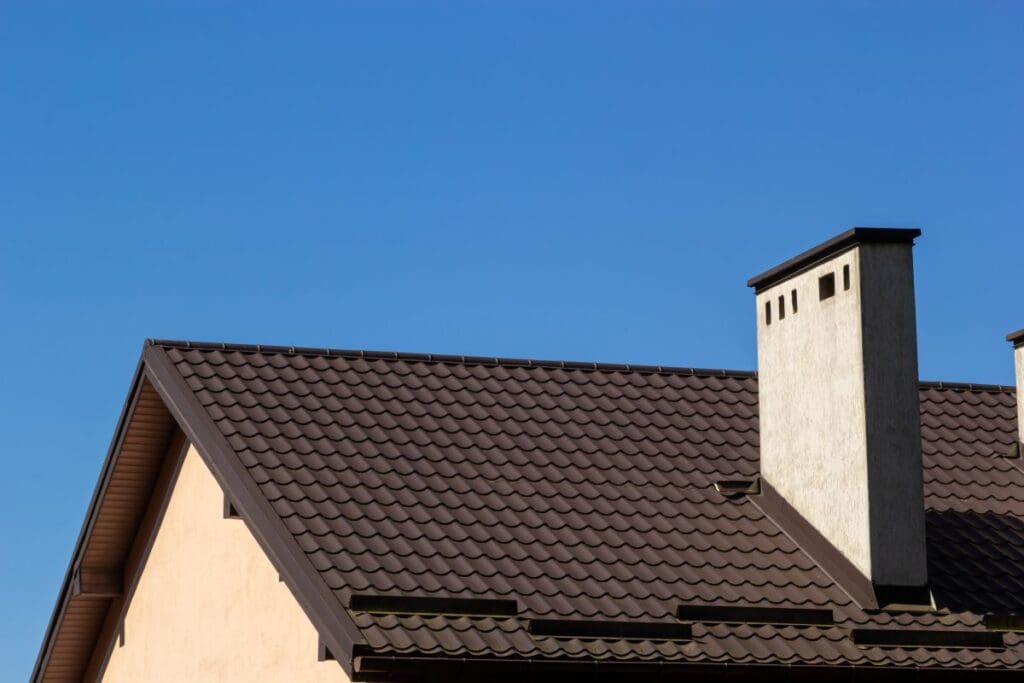
Metal roofing panels are engineered to shed water efficiently across large, uninterrupted surfaces. The moment that surface encounters a wall, a pipe, a skylight, a parapet, or a roof edge, the panel system alone cannot maintain a watertight seal. That is the job of metal roof flashing, and it is a job that requires both the right material for each location and the skill to install it correctly under real field conditions.
Commercial buildings across Pennsylvania and surrounding areas experience a demanding range of weather conditions throughout the year. Freeze-thaw cycles, high winds, and sustained rainfall test every detail of a roofing system, and flashing details are consistently where those tests are failed when installation quality is poor. Understanding what types of flashing are involved and what proper installation looks like gives property owners and facility managers the knowledge to hold contractors accountable for quality work.
- Primary leak prevention: The vast majority of commercial metal roof leaks originate at flashing locations rather than in the panel field. Correct flashing installation addresses the single highest-risk area on any roof.
- Thermal movement accommodation: Metal expands and contracts with temperature changes. Properly designed flashing details allow for that movement without cracking, lifting, or separating from adjacent surfaces.
- Structural edge protection: Perimeter and edge flashing protects the roof assembly from wind uplift by securing the membrane and panel edges against the forces that most commonly cause catastrophic failure during storms.
- Long-term cost reduction: Flashing that is installed correctly the first time rarely needs attention within its designed service life. Poor flashing work creates recurring repair costs that accumulate quickly across a large commercial roof.
- Warranty compliance: Most commercial metal roofing manufacturer warranties specify flashing types, materials, and installation methods. Deviating from those specifications can void coverage on the entire roofing system.
5 Metal Roof Flashing Types and Where They Go
Every location on a commercial metal roof where water could potentially enter through a transition or edge has a specific flashing type designed for it. Using the right flashing type in the right location is the foundation of a watertight installation. Here are the primary flashing types found on commercial metal roofs and what each one does.
1. Eave Flashing
Eave flashing is installed along the lowest edge of a metal roof where water sheds off the panel and must be directed away from the building’s fascia and wall assembly below. It is one of the first flashing details installed on any metal roof and one of the most important for preventing water infiltration at the building perimeter.
- Eave flashing must be sized to capture water from the panel ribs without allowing wind-driven rain to blow back beneath the panel
- The flashing profile must match the panel rib configuration to close off the open space between the panel underside and the eave edge
- Improper eave flashing is a common cause of soffit and fascia deterioration on commercial buildings across Pennsylvania and surrounding areas
2. Rake Flashing
Rake flashing covers the sloped edge of a metal roof at the gable end. It closes off the edge of the panel perpendicular to the slope direction and provides a finished, watertight termination for the panel system at that boundary.
- Rake flashing must be fastened securely to resist wind uplift forces, which are highest at roof edges and corners
- The flashing must lap over or under the roof panels correctly depending on the panel system design to prevent water from tracking beneath it during wind-driven rain events
- Exposed fasteners on rake flashing should be sealed with compatible caulk and inspected regularly as they are common entry points for water once sealant deteriorates
3. Ridge Flashing and Ridge Cap
Ridge flashing sits at the peak of a metal roof where two opposing panel slopes meet. It is a high-exposure location that receives direct weather impact and significant thermal movement stress. Ridge caps must allow for panel movement while maintaining a continuous watertight seal across the full ridge length.
- Pre-formed ridge caps are preferable to site-fabricated versions because their geometry is engineered to the panel profile
- Ridge flashing should incorporate foam closure strips or rubber gaskets beneath the cap to prevent wind-driven rain from entering through the gap between the panel ribs and the cap
- Ridge fasteners should be inspected annually, as they experience more thermal movement cycling than most other flashing fastener locations
4. Valley Flashing
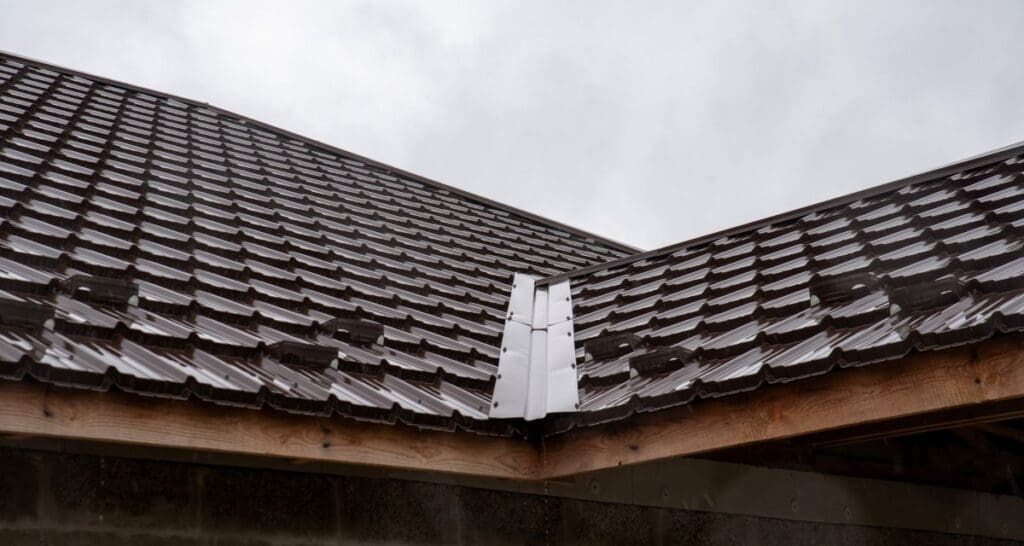
Valley flashing is used where two roof slopes converge, creating a channel that concentrates water flow from both sides. Valleys carry more water volume than any other roof location and must be sized and installed to handle that concentrated flow without backing up or directing water beneath the panel edges.
- Valley flashing should be wide enough to account for the maximum water volume the roof is designed to shed during peak rainfall events
- The flashing must be lapped under the panels on both sides with sufficient overlap to prevent water from tracking laterally beneath the panel during heavy rain
- Debris accumulation in valleys is a common problem; regular clearing is essential to prevent backup and overflow that would otherwise be managed by the valley geometry
5. Step Flashing
Step flashing is used where a metal roof meets a vertical wall surface, typically at dormers, parapets, or sidewalls of adjacent building sections. It is an alternating pattern of individual flashing pieces, each one lapping over the one below it, that creates a stair-step water management detail along the wall-to-roof junction.
- Each step flashing piece must be integrated with the roofing panel below it and the wall cladding above it, creating a layered water management assembly rather than a single-piece seal
- Step flashing is frequently installed incorrectly as a single continuous piece of bent metal rather than individual overlapping units, which creates a failure point at every panel joint along the wall
- Counterflashing is installed over the top of step flashing in masonry wall applications, embedding into a reglet or mortar joint to complete the weather seal at the wall face
6 Key Installation Tips for Metal Roof Flashing
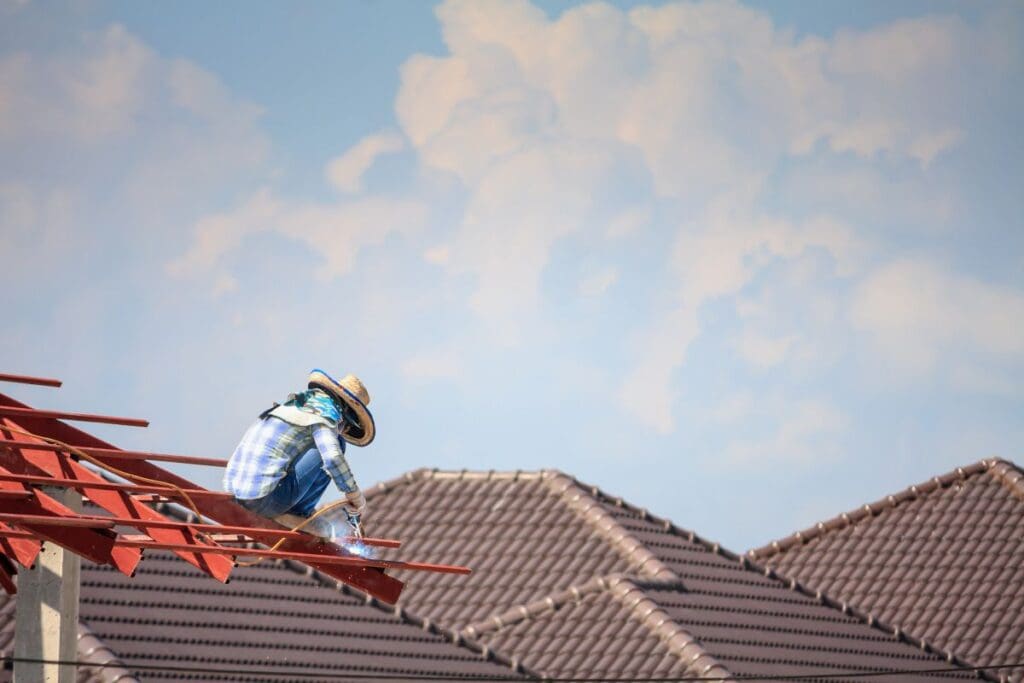
Knowing the flashing types is necessary. Knowing how to install them correctly is what determines whether a commercial metal roof stays watertight for decades or requires repeated repair attention. These five installation practices are where the most consequential quality decisions are made on any metal roofing project.
1. Match the Flashing Metal to the Panel Material
Galvanic corrosion occurs when dissimilar metals are in direct contact in the presence of moisture. Copper ions accelerate corrosion in aluminum and galvanized steel. Aluminum corrodes rapidly against concrete and masonry without a protective barrier. Matching flashing metal to the panel system and separating incompatible materials with appropriate barriers is a fundamental requirement that is frequently overlooked on commercial projects in favor of whatever material is easiest to source.
- Use stainless steel or aluminum flashing with aluminum panel systems
- Use Galvalume or galvanized steel flashing with Galvalume panels where copper is not present anywhere in the assembly
- Physically separate any copper flashing from aluminum or galvanized surfaces using EPDM tape, butyl tape, or another compatible isolating barrier material
2. Allow for Thermal Movement at Every Connection Point
Metal expands and contracts with temperature. A commercial metal roof in Pennsylvania and surrounding areas may experience a temperature differential of 100 degrees Fahrenheit or more between a winter night and a summer afternoon. Flashing connections that are rigid at every point will crack, separate, or pull fasteners out of the substrate as the panel system moves.
- Slotted fastener holes in flashing allow the flashing to move relative to the panel without creating stress at the fastener point
- Expansion joints in long runs of ridge or eave flashing accommodate longitudinal movement along the roof length without buckling
- Sealant joints at flashing terminations should use flexible, paintable, UV-stable sealant rather than rigid caulk that will crack when the metal moves
3. Seal All Fastener Penetrations Through Flashing
Every fastener that penetrates a flashing piece creates a potential water entry point. On exposed fastener metal roofing systems, the fastener seals are often the first component to fail, particularly when fasteners are driven through flashing without the correct washer type or are overtightened and compress the washer beyond its functional shape.
- Use neoprene or EPDM-bonded washers on all flashing fasteners, and verify that the washer sits flat against the metal surface after driving
- Do not overtighten flashing fasteners; a washer that is compressed completely flat has lost its sealing function
- Apply a compatible sealant bead around any exposed fastener head on flashing in high-exposure locations as a secondary moisture barrier
4. Lap Flashing Sections in the Correct Direction
Water moves downhill. Every flashing lap joint must be oriented so that the upper piece laps over the lower piece, not the reverse. An incorrectly lapped flashing joint creates a scoop that channels water directly into the building under the flashing rather than past it. This is a straightforward installation principle that is nonetheless violated regularly when flashing installation is rushed or performed by crews unfamiliar with metal roofing details.
- Inspect all lap joints before the installation is complete and before any sealant is applied that would conceal an incorrect orientation
- Step flashing requires particular attention to lap direction, as each individual piece must lap over the one below it in the panel-to-wall direction
- At valley flashing, confirm that side laps under the panels run in the direction of water flow rather than against it
5. Do Not Rely on Sealant as a Primary Seal
Sealant is a secondary component in a correctly designed metal roof flashing detail, not the primary water barrier. A flashing assembly that relies on a bead of caulk to keep water out of the building is a flashing assembly that will fail within five to ten years when that sealant ages, shrinks, and cracks. Sealant should fill secondary gaps and provide backup protection at joints that are already mechanically sound.
- Design and install flashing so that the mechanical fit of the metal pieces manages water without needing sealant to fill critical gaps
- Apply sealant as a secondary measure after verifying the mechanical connection is correct and fully engaged
- Specify sealant types appropriate to the application: butyl tape for interior lap seams, polyurethane or silicone caulk for exposed exterior joints, and foam closure strips in rib cavities.
6. Inspect Flashing Completely Before Closing Up the Roof
One of the most costly mistakes on any commercial metal roofing project is finalizing the installation before conducting a thorough flashing inspection at every detail location. Once panel runs are completed and equipment is removed from the roof, correcting a flashing error requires significantly more labor and disruption than catching the same problem during installation. A systematic pre-close inspection is not optional on a quality job; it is the last line of defense against problems that would otherwise show up during the first heavy rain.
- Walk every flashing transition point individually before the project is signed off, checking lap directions, fastener seating, sealant application, and closure strip installation at every ridge and eave
- Verify that all penetration flashings, pipe boots, and curb caps are fully seated against the panel surface with no visible gaps or lifted edges
- Check that counterflashing at all wall interfaces is properly embedded or mechanically secured and that no exposed step flashing edges are visible from below the counterflashing termination
- Document the completed flashing installation with photos at every detail location so that future contractors and inspectors have a reference baseline for what was originally installed
Flashing Is Where Commercial Metal Roofs Win or Lose
A metal panel system can be fabricated and installed to a high standard, but if the flashing details at edges, ridges, and penetrations are compromised, the roof will leak. The flashing is where the most skill-dependent work on any metal roofing project takes place, and it is the area that most clearly separates contractors with genuine metal roofing expertise from those working outside their depth.
Weathertite Solutions brings the technical knowledge and field experience to specify and install metal roof flashing correctly across commercial projects throughout Pennsylvania and surrounding areas. Whether you need a full flashing assessment on an existing building, targeted repairs at known leak points, or flashing specification guidance on a new construction project, we give you straight answers and quality work. Contact us today to schedule an inspection and find out exactly what your metal roof’s flashing situation requires.