
Roof coating is one of the most cost-effective tools in commercial building maintenance, but the price range property owners encounter when gathering quotes can be surprisingly wide. Understanding what drives that variation is the difference between making a confident, informed decision and signing a contract you later regret. Commercial roof coating cost depends on a specific set of factors that every property owner should understand before any contractor sets foot on the roof. If you are still getting oriented on what your building actually needs, reviewing what a professional coating assessment involves is a smart place to start.
Here’s what you’ll learn in this guide:
- The seven primary factors that determine commercial roof coating cost
- How different coating types affect both price and long-term performance
- What surface preparation contributes to project cost and why it cannot be skipped
- How coating compares financially to full roof replacement
- What questions to ask a contractor before accepting any coating proposal
Why Roof Coating Deserves a Closer Look Before Replacement
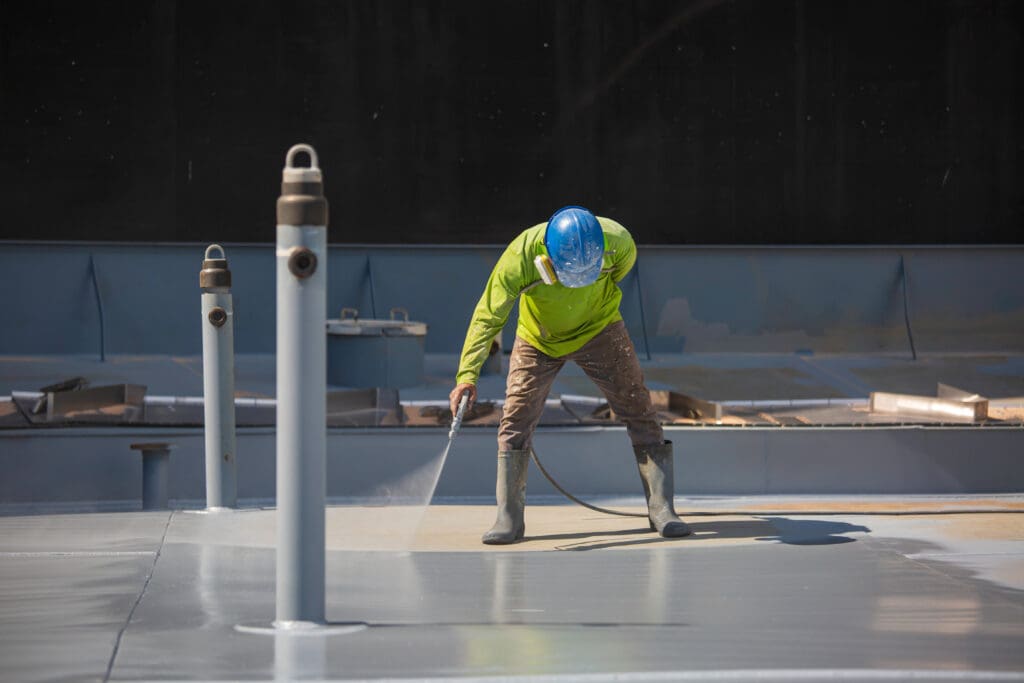
For commercial property owners across New Jersey and surrounding areas managing aging flat or low-slope roofs, coating is often the option that gets dismissed too quickly in favor of full replacement. That is a costly assumption. When a roof membrane is structurally sound but showing surface wear, UV degradation, or minor moisture vulnerability, a professionally applied coating can restore waterproofing performance and extend service life by 10 to 20 years at a fraction of replacement cost.
The financial case for coating over replacement is compelling when the conditions are right. Here is why understanding coating cost in detail pays off:
- Significant savings over replacement: Commercial roof replacement typically runs three to five times more per square foot than a quality coating application. For large roof surfaces, that difference represents hundreds of thousands of dollars in deferred capital expenditure.
- Minimal business disruption: Coating application does not require tear-off, heavy equipment, or extended access restrictions. Most commercial coating projects are completed with minimal impact on building operations.
- Energy performance improvement: Reflective roof coatings reduce rooftop surface temperatures significantly, lowering cooling loads and cutting energy costs in the months following application.
- Warranty restoration: Many coating systems come with manufacturer-backed warranties that effectively restart the clock on roof coverage, giving property owners documented protection for the years ahead.
- Sustainability advantage: Coating avoids the waste stream associated with full tear-off and keeps existing roofing materials out of landfills, which supports sustainability reporting goals for buildings pursuing green certification.
7 Key Factors That Determine Commercial Roof Coating Cost
No two commercial roofing projects are identical, and coating costs reflect that reality. Quotes that vary significantly between contractors are often driven by real differences in scope, material specification, and surface preparation rather than margin differences alone. Here are the seven factors that matter most.
1. Roof Size and Total Square Footage
The most straightforward cost driver is roof area. Coating contractors price projects on a per-square-foot basis, so larger roofs carry higher total costs even when the per-square rate is competitive. However, larger roofs often benefit from economies of scale: mobilization costs, setup time, and equipment expenses are spread across more square footage, which can lower the effective per-square rate on very large projects.
- Most commercial coating contractors quote in roofing squares, where one square equals 100 square feet of roof area
- Accurate measurement matters; roofs with significant penetration density or complex geometry may require more material and labor than a simple square footage calculation suggests
- Request a detailed breakdown of the square footage calculation in any proposal to confirm it reflects actual conditions
2. Existing Roof Membrane Type and Condition
The type of membrane being coated directly affects both material selection and preparation requirements. TPO, EPDM, modified bitumen, built-up roofing, metal, and spray polyurethane foam each require specific primer and coating products for proper adhesion. Applying the wrong coating chemistry to a membrane type results in adhesion failure, often within the first year, which means the entire project must be redone.
- Membrane condition is equally critical: a coating applied over a substrate with significant moisture intrusion, widespread blistering, or structural compromise will fail regardless of product quality
- Pre-application moisture scanning is sometimes necessary to confirm the substrate is dry enough to accept coating, and that assessment adds to project cost
- Heavily deteriorated membranes that require extensive repair before coating can proceed will see cost increases proportional to the repair scope required
3. Surface Preparation Requirements
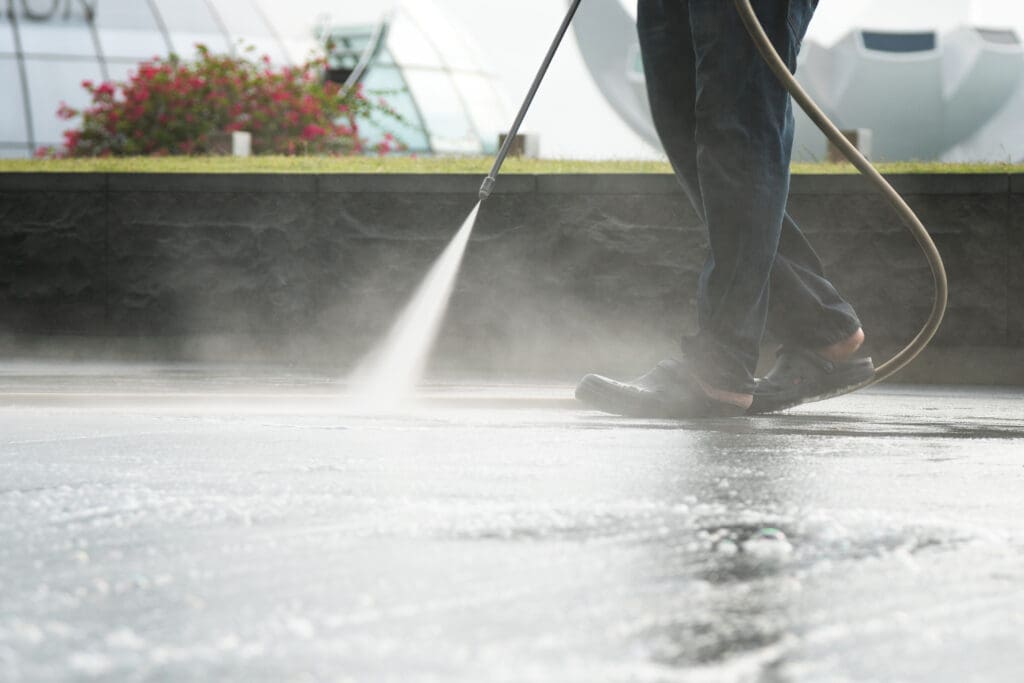
Surface preparation is the single most important determinant of coating longevity, and it is also one of the most significant cost variables between contractor proposals. A coating applied over a dirty, oxidized, or contaminated surface will delaminate. Proper preparation includes pressure washing, cleaning, priming, and repairing damaged areas before any coating material is applied.
- Pressure washing alone on a large commercial roof is a meaningful labor and equipment cost that is sometimes underestimated in low-bid proposals
- Oxidized membrane surfaces require mechanical abrasion or chemical treatment in addition to washing to create a bondable surface profile
- Seam repairs, flashing replacement, and blister corrections completed before coating represent additional material and labor costs that directly affect total project investment
4. Coating Type and Product Specification
Not all roof coatings are created equal, and the product specified has a direct effect on both installed cost and long-term performance. The primary coating categories used on commercial roofs each have distinct price points and performance characteristics.
- Acrylic coatings are water-based, reflective, and the most cost-effective option per square foot. They perform well in climates with moderate rainfall but are not recommended for roofs with chronic ponding water, as acrylic is water-soluble and will erode under standing water conditions.
- Silicone coatings cost more per square foot than acrylic but offer superior ponding water resistance and UV stability. For flat roofs in New Jersey and surrounding areas where ponding is a recurring issue, silicone is often the more appropriate specification despite the higher upfront cost.
- Polyurethane coatings provide the highest abrasion and impact resistance of the major coating types, making them appropriate for roofs with significant foot traffic. They carry a higher material cost than both acrylic and silicone.
- Butyl and asphalt-based coatings are used primarily on modified bitumen and built-up roofing systems where compatibility with asphalt-based membranes is required.
5. Number of Coating Coats and Applied Thickness
Manufacturer warranties on commercial roof coatings are typically tied to a minimum dry film thickness, measured in mils. Achieving that minimum thickness may require two or three coat applications depending on the product and the substrate condition. Each additional coat adds material and labor cost but is essential for warranty compliance and long-term performance.
- A single thin coat of any coating product is rarely sufficient for a warranted commercial application; most specifications call for a base coat and finish coat at minimum
- Some silicone systems specify a reinforcing fabric embedded in the base coat at seams and flashings, adding material cost but significantly improving those high-risk locations
- Contractors who bid only one coat to lower their price are delivering a product that will not perform to the specification or warranty standard of a properly applied system
6. Roof Accessibility and Project Logistics
Roof access conditions affect labor cost in ways that are easy to overlook when comparing proposals. A large, open roof with good ground-level access for equipment is far more efficient to work on than a roof with limited access points, significant equipment obstacles, or height requirements that demand specialized lift equipment.
- Buildings in dense urban environments across New Jersey and surrounding areas may require lane closures, extended staging areas, or off-hours work that add logistical costs to the project
- Roofs with high penetration density, HVAC equipment clusters, or rooftop structures require more masking, detailing, and time per square foot than open field areas
- Multi-story buildings may require lifts or specialized equipment for material staging that adds to project mobilization cost
7. Warranty Terms and Contractor Certification
The warranty offered with a commercial coating application is not a free add-on. It reflects the manufacturer’s confidence in the product and the contractor’s certification level, and it represents real value in the form of documented coverage if the coating fails within the warranty period. Manufacturer-backed warranties typically require installation by certified contractors using specified products at specified thicknesses, and they carry costs that bare-bones proposals without warranties do not include.
- Contractor certification fees, manufacturer inspections, and warranty registration processes are all absorbed in the project cost for warranted applications
- Warranty terms range from 5 to 20 years depending on the coating system and application specification; longer warranties generally require thicker application and higher-tier product specifications
- A warranted coating system from a certified contractor typically costs more per square foot than an unwarranted application, but the coverage it provides represents significant risk reduction for the building owner
How Commercial Roof Coating Cost Compares to Full Replacement
One of the most useful frameworks for evaluating coating cost is direct comparison to the alternative. For property owners across New Jersey and surrounding areas weighing coating against replacement, the numbers are typically compelling when the membrane is a viable candidate for coating.
Typical Cost Ranges
Commercial roof replacement costs vary widely by system type, location, and market conditions, but full tear-off and replacement of a commercial flat roof typically runs from $8 to $20 or more per square foot depending on the system specified. A quality commercial coating application, by comparison, typically ranges from $2 to $6 per square foot depending on the factors outlined above.
When Coating Is the Right Financial Decision
Coating makes strong financial sense when the existing membrane is structurally sound, insulation is dry, and the remaining service life without coating would be limited. In those conditions, the cost differential between coating and replacement represents direct savings to the property owner while delivering documented warranty coverage.
When Replacement Is the Better Investment
Coating is not appropriate for every roof. When moisture scanning reveals widespread insulation saturation, when the membrane has reached the end of its structural service life, or when repair costs required before coating would approach replacement cost, full replacement delivers better value. An honest contractor will tell you which situation you are in rather than selling you a coating on a roof that needs replacement.
What to Ask Before Accepting a Commercial Roof Coating Proposal
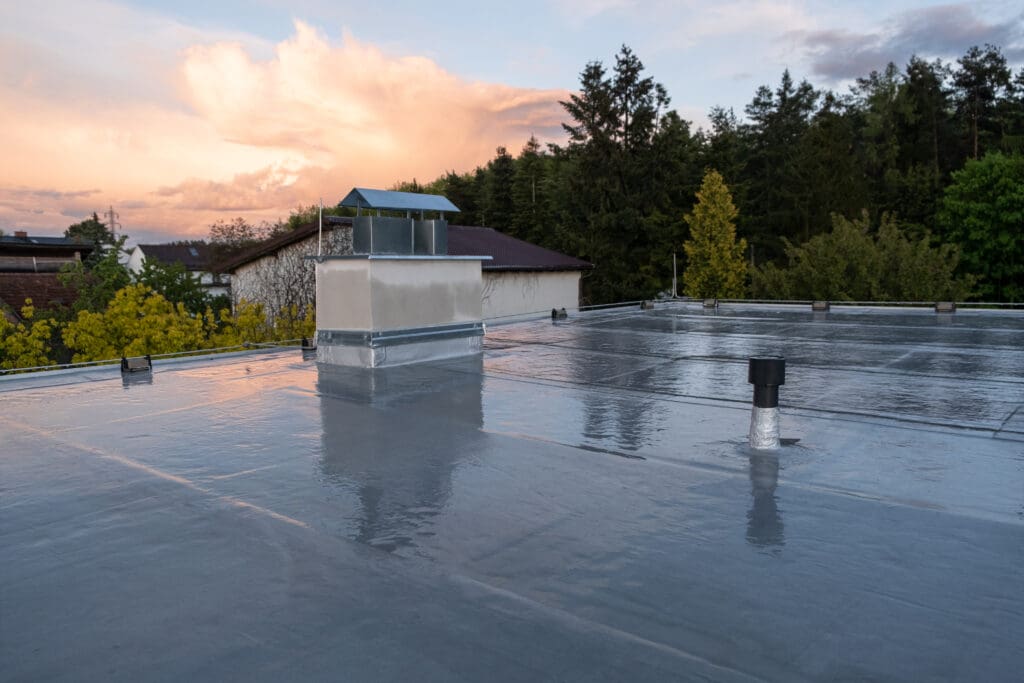
Comparing coating proposals without a consistent evaluation framework leads to poor decisions. These questions create a baseline for any proposal review.
- Does the proposal specify the coating product by manufacturer and product name, or does it use generic terms like “elastomeric coating” without specifics?
- What surface preparation is included in the scope, and how is it documented?
- How many coats are included and what is the specified dry film thickness at completion?
- Is the application warranted by the manufacturer, and what does that warranty cover?
- Is the contractor certified by the coating manufacturer to apply this specific product?
- What repair scope is included before coating, and what conditions would trigger additional repair costs?
For commercial properties across New Jersey and surrounding areas, getting clear written answers to these questions before signing any coating contract is the most reliable way to ensure the project delivers what it promises.
Get a Straight Answer on What Your Roof Actually Needs
Commercial roof coating cost is only meaningful in context. A low per-square price on an improperly prepared surface or an under-specified coating system is not a good deal. A higher-cost proposal with documented preparation, manufacturer-specified product, correct applied thickness, and a meaningful warranty is an investment with a defined return.
Weathertite Solutions provides commercial property owners and facility managers across New Jersey and surrounding areas with honest roof assessments, transparent coating proposals, and the manufacturer certifications to back up warranted installations. Whether your roof is a strong coating candidate or needs a different approach entirely, we will give you the straight answer your building deserves. Contact us today to schedule your assessment and find out exactly what your commercial roof coating project should cost and why.