
Where a fastener lands on a metal panel looks like a minor detail, yet it shapes how a roof handles water, wind, and decades of thermal movement. Facility managers often hear conflicting advice about metal roof screws on rib or flat placement, and the wrong call can lead to leaks and loose panels. Knowing the real differences helps you hold installers to a higher standard. If you are evaluating panel work on your building, seeing how a complete commercial project is planned offers helpful context.
Here’s what you’ll learn in this guide:
- Why fastener placement affects leaks, wind resistance, and panel life
- Six key differences between screws set in the rib and screws set in the flat
- How to choose the right screw length, washer, and coating for each location
- Installation mistakes that cause early failures and how to prevent them
- What to ask a contractor before any panel installation or repair begins
Why Screw Placement Is Worth Getting Right
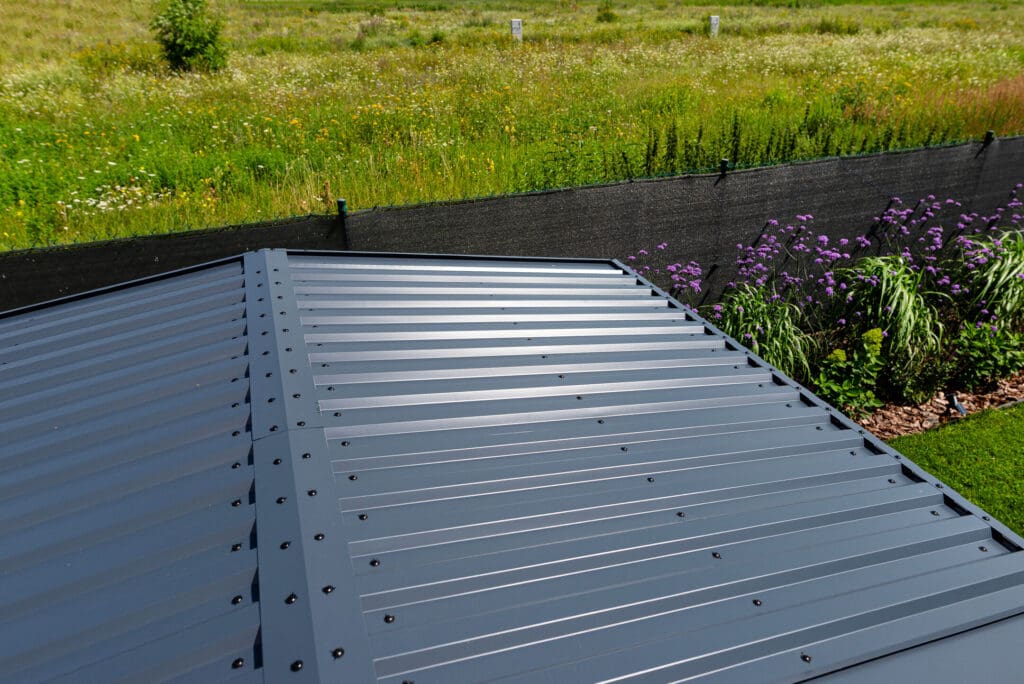
Exposed fastener metal roofing depends on hundreds or thousands of small penetrations staying watertight for decades. Every screw is a potential leak point, and every screw also carries load from wind uplift, snow, and the constant expansion and contraction of metal. Across New York and surrounding areas, freeze-thaw cycling and heavy seasonal weather test those connections harder than many owners expect.
Panel profiles such as R-panel, PBR, and corrugated all have raised ribs and lower flat sections, and the question of which one receives the screw comes up on nearly every project. There is no single answer that fits every profile, which is exactly why understanding the tradeoffs matters.
- Leak prevention: Screw location changes how much water reaches the fastener, which directly affects how often washers and sealants must perform at their limit.
- Wind uplift resistance: How firmly a panel is held against the framing determines how well the roof resists the forces that peel metal back during storms.
- Panel movement control: Placement influences how the panel expands and contracts, and whether that movement stresses the fastener hole.
- Warranty compliance: Manufacturers publish specific fastening patterns, and straying from them can put coverage at risk.
- Long-term maintenance cost: Fasteners installed correctly in the right location need far less re-sealing and replacement over the life of the roof.
6 Key Differences Between Screws on the Rib and Screws in the Flat
The comparison below applies broadly to through-fastened panels, but profiles vary. Many manufacturers specify fastening in the flat for primary attachment on common commercial panels, while others call for the high rib on certain corrugated and specialty profiles. The installation guide for your specific panel always takes priority over general rules.
1. Water Exposure at the Fastener
Water runs down the flat sections of a panel and moves away from the raised ribs. A screw set in the flat sits in the path of that flow, so its washer faces rain, snowmelt, and any ponding at the base of the rib. A screw set at the top of the rib stays above most of that water.
- Flat fasteners rely heavily on a healthy washer seal because they see more water contact
- Rib fasteners see less direct water but are exposed to more sun and wind
- Debris and ice dams can still back water up over flat fasteners on low-slope panels
2. Fastener Length and Engagement
A screw in the flat travels a short distance from the panel surface to the purlin or deck below. A screw in the rib has to cross the open hollow beneath the rib before it reaches the framing, which usually calls for a longer fastener or a specialized design.
- Rib fasteners must be sized so they fully engage the structural substrate and do not rely on the panel alone
- Insufficient thread engagement is a leading cause of fasteners backing out over time
- Mixing lengths without a plan can leave some screws under-seated and others over-driven
3. Panel Seating and Contact With the Framing
Fastening in the flat pulls the panel directly against the purlin, which creates a firm, tight connection. Fastening at the rib can leave a gap beneath the panel, and tightening a screw into that gap can distort the rib or bend the panel profile.
- Tight contact in the flat generally supports a consistent, repeatable installation
- Over-tightening in the rib can crush the profile and weaken the panel’s shape
- Distorted ribs can open small channels that let wind-driven rain travel beneath the lap
4. Wind Uplift and Holding Strength
Storm winds try to lift panels off the roof, and the fastener pattern carries that load into the structure. Because screws in the flat clamp the panel straight down against the framing, many manufacturers rely on that pattern for primary attachment. Rib screws are commonly used at side laps and stitch locations where panels connect to each other.
- Primary attachment patterns are engineered for the panel gauge and wind zone
- Perimeter and corner zones typically require tighter fastener spacing than the field of the roof
- Adding extra screws in the wrong place does not always improve performance and can create new leak points
5. Washer Behavior and Sealing Performance
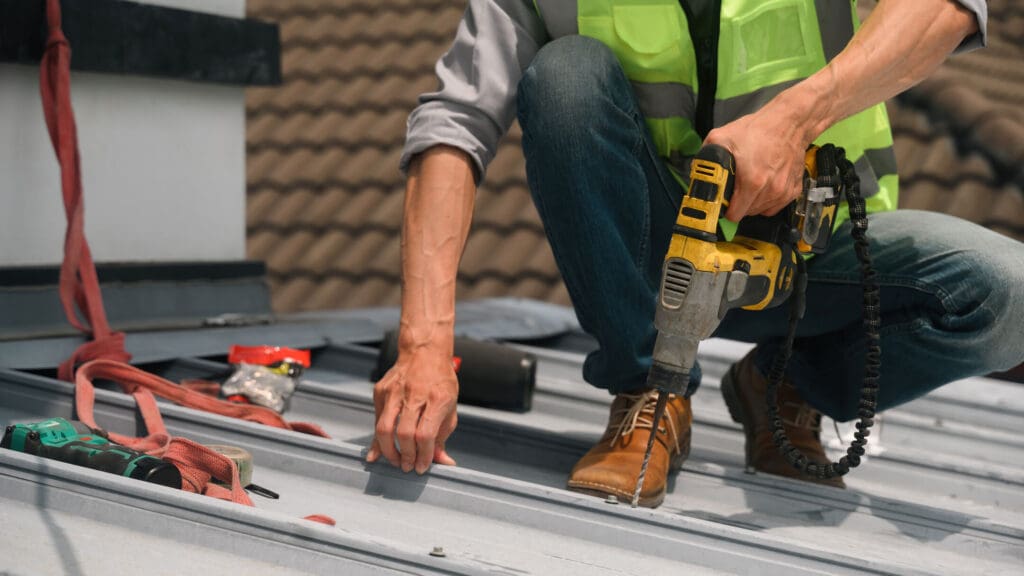
The rubber washer beneath the screw head is the actual seal. In the flat, the washer compresses against a broad, level surface, which tends to produce an even seal when the screw is driven correctly. On a rib, the washer often meets a curved or angled surface, and the seal depends more heavily on proper angle and driving depth.
- A correctly compressed washer shows a slight, even bulge around the head
- A crushed washer has lost its flexibility, and a loose washer never sealed in the first place
- EPDM-bonded washers resist sun and weather better than basic neoprene in most commercial applications
6. Thermal Movement and Long-Term Maintenance
Metal panels grow and shrink with temperature swings of 100 degrees or more across a year. Fasteners in the flat generally hold the panel firmly while the ribs flex around them, whereas rib fasteners can see more lateral stress as the profile moves. Either location can work, but both need periodic inspection.
- Slotted holes or properly sized oversize holes help panels move without tearing around the fastener
- Inspect fasteners annually for backing out, elongated holes, and washer cracking
- Expect to replace fasteners and washers well before the panels themselves reach end of life
Choosing the Right Screw for Each Location
Placement is only half the equation. A well-located screw still fails if it is the wrong size, coating, or washer type for the application. These factors are worth confirming before material is ordered.
- Length: Choose a length that fully penetrates the framing with adequate thread engagement, accounting for the gap beneath ribbed profiles.
- Diameter: Larger diameters hold better in thin or worn framing and are often used for replacement screws in enlarged holes.
- Washer material: Bonded EPDM washers generally outperform basic neoprene against UV and ozone exposure.
- Coating and corrosion resistance: Match the screw coating to the panel finish and local environment to avoid galvanic reaction and rust streaking.
- Point style: Self-drilling points suit steel framing, while self-tapping or wood-thread styles suit timber purlins.
- Head and drive: Hex heads provide strong driving control and a reliable surface for the washer to compress against.
Installation Best Practices and Common Mistakes
Strong results come from following the panel manufacturer’s fastening schedule precisely and checking the work as it goes. Most fastener failures can be traced to a handful of avoidable errors.
Follow the Manufacturer’s Fastening Pattern
Spacing, location, and count are engineered for specific wind and snow loads. Installers who improvise patterns to save time or material risk both performance and warranty coverage. For commercial buildings across New York and surrounding areas, confirm the pattern for perimeter, corner, and field zones before work begins.
Drive Screws Straight and to the Right Depth
A screw driven at an angle never compresses its washer evenly, and a screw driven too deep crushes it. Both conditions create a path for water. Calibrated drivers with depth control help installers hit the correct seating consistently.
Quick Comparison: Rib Versus Flat Fastening
| Factor | Screws in the Flat | Screws on the Rib |
| Water exposure | Higher, sits in the drainage path | Lower, sits above the flow |
| Panel contact with framing | Tight and direct | Gap beneath the rib |
| Typical fastener length | Shorter | Longer or specialized |
| Common use | Primary panel attachment on many commercial profiles | Side laps, stitch screws, and some corrugated profiles |
| Main risk | Washer failure from constant water contact | Distorted ribs from over-tightening |
Inspect and Maintain on a Schedule
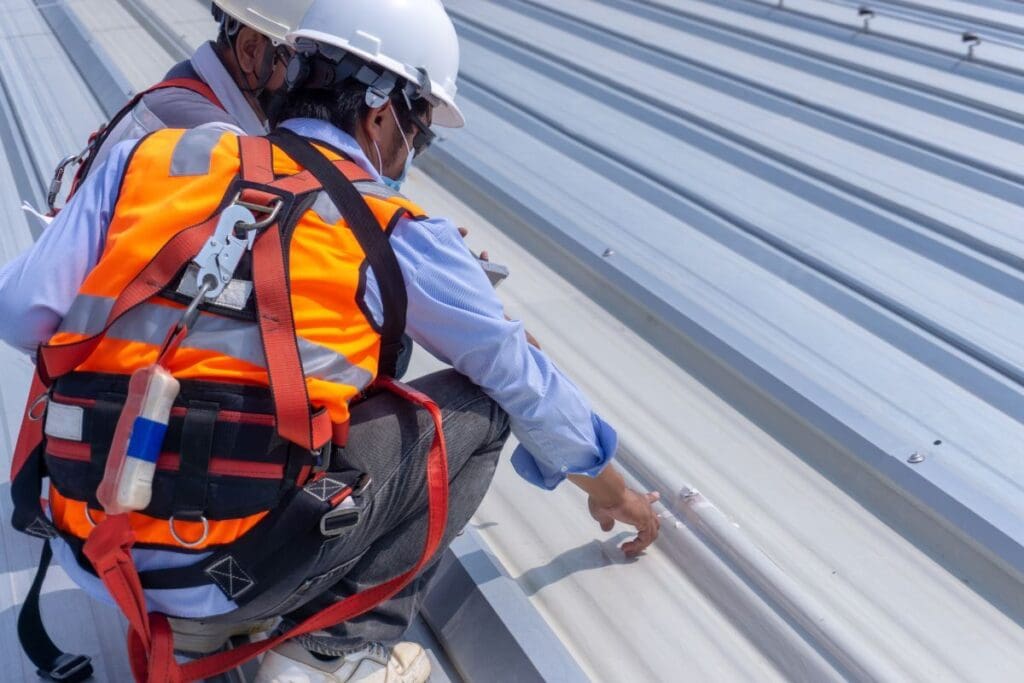
Even perfect installation does not remove the need for maintenance. Walk the roof at least once a year and after major storms, looking for raised screw heads, cracked washers, and rust at fastener locations. Replacing a backing-out fastener early costs very little compared to repairing the interior damage a slow leak can cause.
Get Your Fastener Details Right From the Start
Metal roofs earn their reputation for durability, but that durability depends on details most people never see from the ground. Where screws go, how they are driven, and what they are made of all shape how well the roof performs after the first decade.
Weathertite Solutions works with commercial property owners and facility managers across New York and surrounding areas to inspect existing metal roofs, correct fastener problems, and manage installations that follow manufacturer specifications from the first panel to the last. If you are planning new metal roofing or noticing leaks around screw heads, we can give you a clear assessment of what the roof needs. Contact us today to schedule an inspection and get answers specific to your building.