
Flat roofs take a beating. Between pooling water, temperature swings, and years of UV exposure, your flat asphalt roof is constantly fighting off the elements. Knowing when to act is the difference between a manageable repair bill and a full replacement. If you’ve noticed something off with your roof, understanding your options for asphalt flat roof repair can save you significant time and money before small problems spiral into structural damage.
Here’s what you’ll learn in this guide:
- The most common warning signs that your flat asphalt roof needs immediate attention
- Why delaying flat roof repair typically costs more in the long run
- How the expected lifespan of your system affects your repair-or-replace decision
- What maintenance steps extend roof life and provide long lasting protection
- How to choose the right contractor for commercial flat roof work
Common Flat Roof Problems You Shouldn’t Ignore
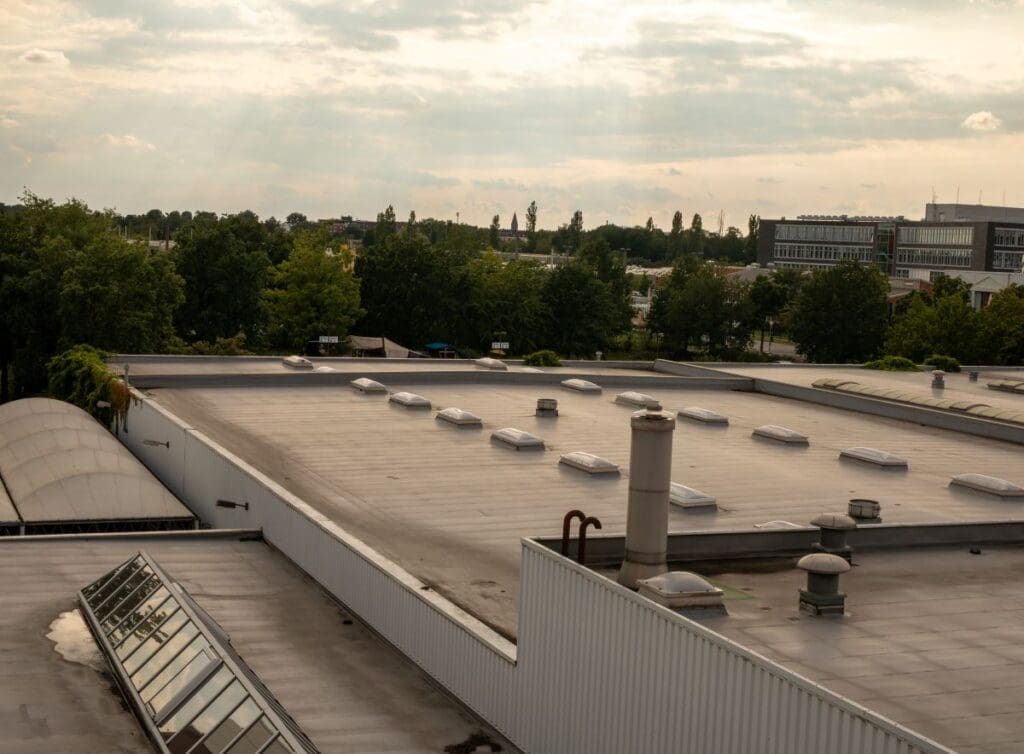
Asphalt flat roofing systems are workhorses. They’re durable, cost-effective, and widely used across commercial properties throughout New Jersey and surrounding areas. But they’re not indestructible. Because flat roofs don’t shed water the way sloped systems do, any compromise in the membrane, flashing, or drainage can escalate quickly. Water finds the path of least resistance, and on a flat roof, that path often leads straight into your building.
Catching problems early is not just smart maintenance. It’s the financially sound move. Here’s why staying ahead of flat roof repair matters:
- Lower overall costs: Addressing a small membrane crack costs a fraction of what full deck replacement runs after water damage has spread.
- Business continuity: A leaking commercial roof can disrupt operations, force closures, and create liability. Fast repairs keep your facility functional.
- Warranty protection: Many roofing system warranties require documented maintenance and timely repairs to remain valid. Neglect can void coverage entirely.
- Energy efficiency: Damaged insulation beneath a compromised membrane drives up heating and cooling costs throughout your building.
- Long lasting protection: Proactive repairs are what separate a roof that hits its full service life from one that fails prematurely.
6 Signs Your Flat Roof Repair Can’t Wait
Even a well-installed flat asphalt roof will show signs of wear over time. The key is recognizing those signs before they become emergencies. Here are the seven most common indicators that your roof needs professional attention now, not next quarter.
1. Standing Water That Won’t Drain
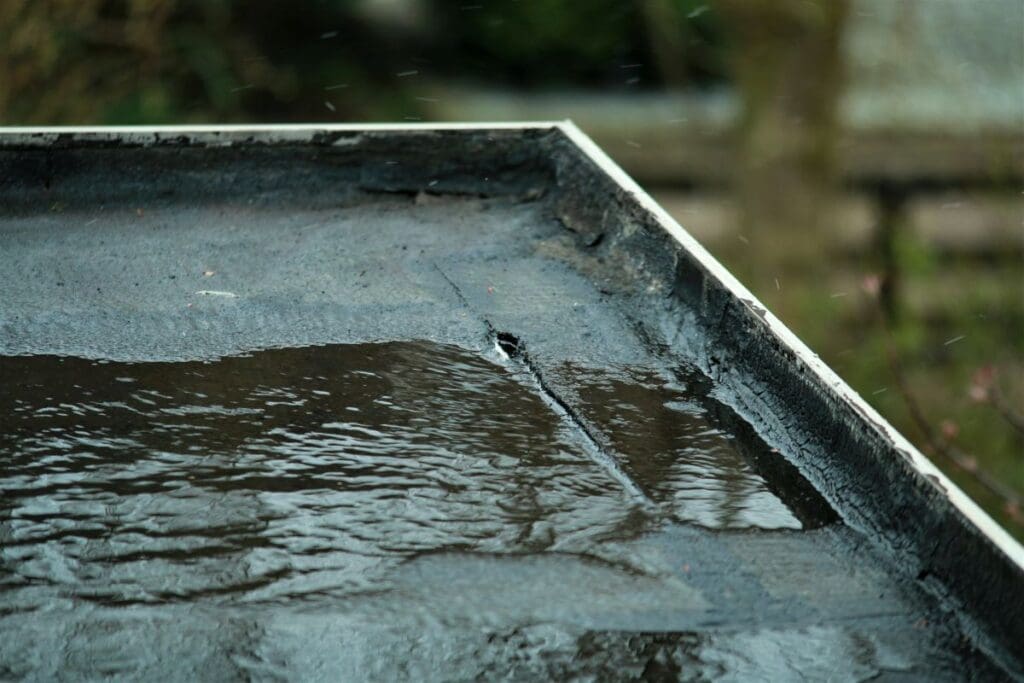
Flat roofs are designed with a slight pitch to direct water toward drains and scuppers. When those systems clog or the roof surface settles unevenly, water pools and sits. Standing water adds significant weight to the structure and accelerates membrane breakdown.
- Pooling lasting more than 48 hours after rain is a serious red flag
- Debris buildup around drains is a frequent culprit
- Ponding water can freeze in winter, causing additional surface cracking
2. Blistering or Bubbling on the Surface
Blisters form when moisture or air gets trapped beneath the asphalt layers. They appear as raised bubbles on the roof surface and indicate that the membrane is delaminating. Left alone, blisters eventually rupture, opening the roof to direct water infiltration.
- Small blisters can sometimes be addressed with targeted repairs
- Large or widespread blistering may indicate systemic membrane failure
- Blistering near seams or edges typically worsens fastest
3. Cracks, Splits, or Alligatoring
Alligatoring is the term for the pattern of cracking that develops in aged asphalt when it loses flexibility. It looks like the scaly texture of alligator skin, and it’s a clear sign the surface can no longer repel water effectively.
- Alligatoring often appears first in areas with direct sun exposure
- Cracks can deepen through freeze-thaw cycles, especially across Pennsylvania and surrounding areas
- Splits along seams are particularly urgent since seams are already stress points
4. Damaged or Deteriorating Flashing
Flashing is the metal or modified bitumen material used to seal transitions around vents, HVAC units, skylights, parapet walls, and drains. It’s one of the most leak-prone areas on any flat roof because it’s subjected to constant thermal movement.
- Flashing that’s lifting, cracking, or pulling away from the surface needs immediate resealing
- Rust or corrosion on metal flashing is a sign the seal has already failed
- Many commercial roof leaks originate at flashing points even when the field membrane looks intact
5. Interior Water Stains or Active Leaks
By the time water shows up on your ceiling tiles or interior walls, the roof membrane has likely been compromised for a while. Water travels horizontally through insulation before it drops, so the visible stain may not be directly below the entry point.
- Staining on ceiling tiles, walls, or insulation warrants immediate roof inspection
- Musty odors can indicate hidden moisture even without visible staining
- Mold growth behind walls or on ceilings is a sign of prolonged water intrusion
6. Granule Loss or Surface Erosion
Modified bitumen and built-up asphalt systems rely on a protective surface layer of granules or aggregate to reflect UV rays and protect the underlying asphalt. When that protective layer erodes, the membrane ages rapidly.
- Granule deposits collecting in drains after rain indicate surface erosion
- Exposed dark asphalt that looks shiny or oily has lost its surface protection
- Erosion accelerates in areas with heavy foot traffic from rooftop mechanical work
Flat Roof Repair vs. Flat Roof Replacement: How to Know Which You Need
One of the most common questions commercial property owners face is whether a repair will actually solve the problem or whether flat roof replacement is the smarter long-term investment. There’s no universal answer, but there are clear factors that point you in one direction or the other.
When Flat Roof Repair Makes Sense
Repair is usually the right call when damage is isolated and the overall membrane is still in good condition. A professional assessment will look at how much of the roof surface is compromised and whether the underlying decking and insulation are still structurally sound.
- Damage is limited to specific areas rather than spread across the membrane
- The roof is within the earlier portion of its expected lifespan
- Flashings and drainage infrastructure are still performing adequately
- The deck shows no signs of rot, delamination, or structural compromise
When Flat Roof Replacement Is the Better Move
Sometimes the cost of ongoing repairs outpaces the value they deliver. If your roof has been patched repeatedly and problems keep coming back in new locations, replacement is likely the more economical path.
- More than 25 percent of the membrane surface shows damage or moisture saturation
- The roof has already exceeded its expected lifespan and repairs are frequent
- Insulation beneath the membrane has absorbed significant moisture and lost R-value
- You’re planning a building renovation or sale that warrants a full system upgrade
A seasoned contractor will give you an honest comparison of projected repair costs versus replacement costs over a five to ten year window, so you can make a decision based on actual numbers rather than guesswork.
Modified Bitumen and Other Flat Asphalt Systems: What You’re Working With
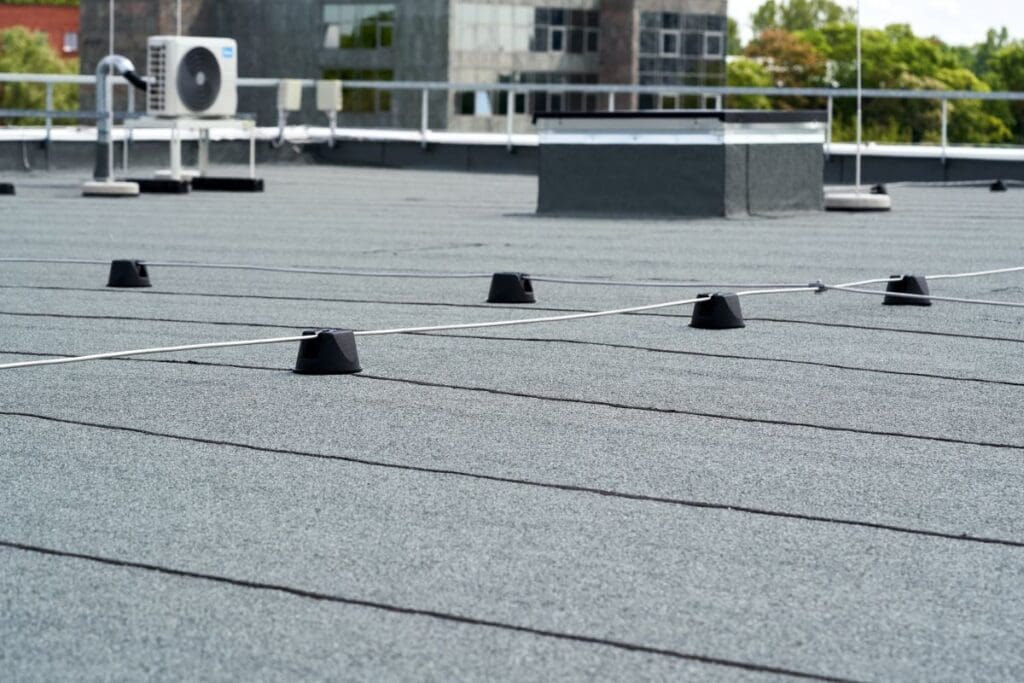
Understanding your roofing system helps you make better decisions about repairs and long-term maintenance. Flat asphalt roofs aren’t all the same, and the repair approach varies by system type.
Modified Bitumen
Modified bitumen is one of the most widely used flat roofing systems in commercial construction. It’s an asphalt-based material reinforced with polymers, typically installed in multiple plies and finished with a granulated or smooth cap sheet. Modified bitumen offers excellent flexibility across temperature ranges, which is a significant advantage in climates like New Jersey and surrounding areas where seasonal temperature swings are significant.
Repairs to modified bitumen typically involve:
- Heat-welding or cold-adhesive patching with compatible cap sheet material
- Seam reinforcement using matching membrane strips
- Flashing replacement using torch-applied or self-adhering modified bitumen
Built-Up Asphalt (BUR) Roofing
Built-up roofing consists of alternating layers of bitumen and reinforcing fabric, topped with aggregate or a cap sheet. It’s a proven system with a long track record, though it requires specific expertise to repair correctly.
How Flat Asphalt Systems Compare to EPDM Rubber Roofing
EPDM rubber roofing is a popular single-ply alternative to asphalt-based systems. Both are widely used on commercial flat roofs, but they differ in material composition, repair methods, and performance characteristics.
| Feature | Flat Asphalt (Modified Bitumen / BUR) | EPDM Rubber Roofing |
| Material base | Asphalt and polymer reinforcement | Synthetic rubber (ethylene propylene) |
| Typical lifespan | 15 to 25 years | 20 to 30 years |
| Repair method | Heat welding or cold adhesive patching | Seam tape or liquid adhesive patching |
| UV resistance | Granule or coating-dependent | Naturally UV resistant |
| Best for | Multi-ply durability, foot traffic tolerance | Low-slope, large open roof decks |
Knowing which system you have determines which repair materials and methods are appropriate. Applying EPDM repair products to an asphalt system, or vice versa, can cause adhesion failure and create new problems.
Don’t Wait Until It’s a Crisis
A flat roof problem doesn’t fix itself. The longer damage sits unaddressed, the more it spreads, and the more expensive the solution becomes. From a small crack letting in moisture after every rain to flashing that’s been pulling away for a season, these are problems with urgency behind them.
Weathertite Solutions serves commercial clients across New Jersey and surrounding areas with professional flat roof repair, restoration, and maintenance built around honest assessments and quality workmanship. Whether you’re facing an active leak, concerned about your roof’s expected lifespan, or just want an expert opinion before committing to repairs, getting eyes on the roof sooner is always the right call. Contact us today to schedule your inspection and find out exactly what your roof needs.