
The right sealant is what keeps a metal roof watertight at every fastener, seam, flashing, and penetration point. Without it, even a well-installed metal panel system develops leaks at its most vulnerable transitions. Choosing the best metal roof sealant for your application is not a matter of grabbing whatever is available at the hardware store. It requires understanding the chemistry behind the product, how it performs under thermal movement, and whether it is compatible with your specific metal panel system. If you want to understand how sealant fits into the full scope of metal roof care, what follows gives you the foundation to make the right call.
Here’s what you’ll learn in this guide:
- Why sealant selection matters as much as the sealant application itself
- The five top metal roof sealant types and where each one performs best
- How thermal movement affects sealant performance over time
- Common sealant application mistakes that lead to premature failure
- How to evaluate sealant condition during routine roof inspections
Why the Right Metal Roof Sealant Makes a Measurable Difference
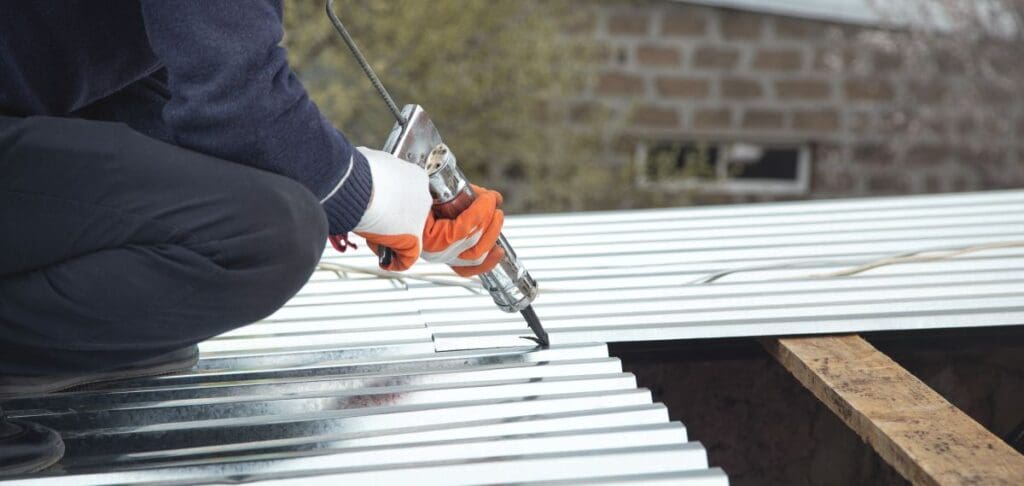
Metal roofing is one of the most durable commercial roofing systems available, but its performance depends heavily on the integrity of every sealed joint, fastener penetration, and flashing termination across the roof surface. Those locations are where thermal movement concentrates stress, where water finds its entry point when sealant fails, and where the gap between a roof that performs for 40 years and one that leaks every other season is determined.
For commercial buildings across Pennsylvania and surrounding areas, the thermal environment that metal roofing operates in is demanding. Temperature swings from winter lows to summer highs can exceed 100 degrees Fahrenheit, and metal panels expand and contract with every degree of change. A sealant that cannot accommodate that movement will crack, pull away from the substrate, and fail in a matter of years regardless of how well everything else was installed. Getting sealant selection right is not a secondary consideration; it is a primary one.
- Joint integrity over thermal cycles: The best metal roof sealant maintains adhesion and flexibility through repeated expansion and contraction cycles without cracking or delaminating from the metal substrate. Lesser products harden over time and lose the movement tolerance that makes them functional.
- Long service life between maintenance intervals: A quality sealant applied correctly in a compatible application can last 15 to 20 years before requiring replacement. An incompatible or inferior product may begin failing within three to five years, dramatically increasing maintenance frequency and cost.
- Waterproofing at the highest-risk locations: Fastener penetrations, panel end laps, ridge caps, and flashing terminations are where the vast majority of metal roof leaks originate. Sealant is the first and often only line of defense at those locations.
- Compatibility protection: Using the wrong sealant chemistry on certain metal substrates causes accelerated corrosion at the contact point. Choosing a product specifically rated for the metal panel type in use protects the panel itself, not just the joint.
- Cost avoidance through prevention: A tube of correctly specified sealant costs a fraction of what a single leak repair event costs when water has entered the building and damaged interior finishes, insulation, or equipment below.
5 Top Metal Roof Sealant Picks You Should Know
Metal roof sealants span a range of chemistries, each with specific performance advantages and appropriate use cases. Understanding the top options and where they perform best allows property owners and facility managers to ask the right questions when reviewing contractor proposals and maintenance specifications.
1. Silicone Sealant
Silicone is widely regarded as the highest-performing sealant for metal roofing applications where UV exposure and long-term flexibility are the primary requirements. It remains flexible across an extremely wide temperature range, does not harden or become brittle with age the way many other sealant chemistries do, and offers excellent adhesion to most clean metal substrates.
Silicone is the go-to choice for exposed exterior joints on commercial metal roofs, particularly at ridge cap terminations, panel end laps, and roof-to-wall transitions where direct weather exposure and thermal movement are greatest.
- Silicone does not accept paint after application, which is a consideration for visible joints on architecturally sensitive buildings
- It maintains flexibility from approximately negative 65 degrees Fahrenheit to over 300 degrees Fahrenheit, making it appropriate for the full range of conditions experienced on commercial metal roofs across Pennsylvania and surrounding areas
- Neutral-cure silicone formulations are preferred for metal applications because acetoxy-cure silicone releases acetic acid during curing, which can cause surface corrosion on some metal substrates
2. Polyurethane Sealant
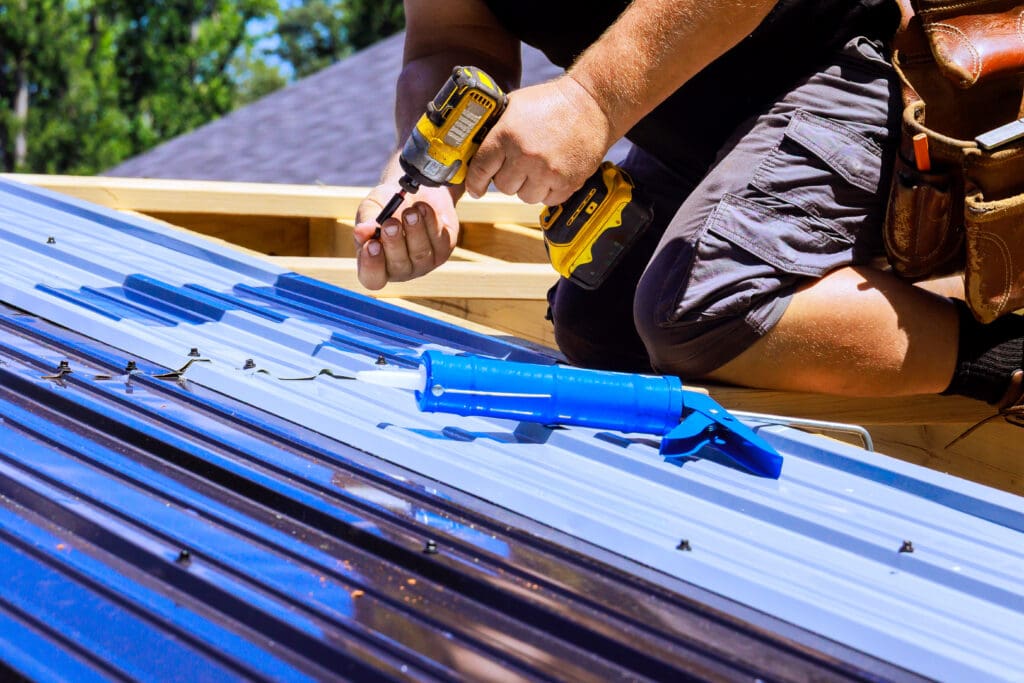
Polyurethane sealants offer excellent adhesion to metal substrates and are paintable after curing, which makes them a practical choice for joints where color matching to the panel finish is a requirement. They handle moderate thermal movement well and provide strong resistance to abrasion and physical wear, which matters in locations subject to foot traffic or mechanical contact.
Polyurethane is commonly specified for metal roof applications where adhesion to multiple substrate types at a single joint is needed, such as where metal flashing meets concrete, masonry, or wood trim elements.
- Polyurethane sealants are moisture-cure products, meaning they require ambient humidity to cure. In very dry conditions, curing slows significantly, which affects how quickly the joint becomes functional after application
- They have somewhat lower UV resistance than silicone over the long term and may chalk or discolor under direct sun exposure, making them less ideal for exposed horizontal joints on roof surfaces
- One-component polyurethane formulations are standard for field application; two-component versions offer faster cure times but require mixing equipment and careful proportioning
3. Butyl Tape and Butyl Sealant
Butyl is not a cured sealant in the conventional sense. It remains permanently tacky and deformable rather than setting to a firm state, which gives it unique sealing properties at compression joints and lap seams where the sealant is captured between two metal surfaces rather than exposed on the exterior.
Butyl tape is standard practice for interior lap seams on metal roofing panels, where it is installed between the panel layers before fastening and then compressed by the fastener to create a continuous seal at the lap joint. It is also used as a bedding sealant beneath ridge caps and at panel end conditions.
- Butyl tape must be installed on clean, dry, and primed metal surfaces for full adhesion; contaminated surfaces prevent the butyl from bonding and create voids that admit water
- It should not be used as an exposed exterior sealant because UV exposure degrades unprotected butyl, causing surface cracking and hardening that reduces its sealing effectiveness
- Butyl is available in tape form at various widths and thicknesses to suit different lap seam dimensions, and in tube form for applications where a bead is needed in a confined location
4. EPDM-Based Sealant and Tape
EPDM-formulated sealants and self-adhering tapes are widely used in commercial metal roofing for seam reinforcement and penetration flashing applications. EPDM offers excellent UV and ozone resistance, maintains flexibility across a broad temperature range, and bonds well to primed metal surfaces using compatible contact adhesives.
EPDM tape is particularly common for covering exposed lap seam edges on metal roofing systems where the lapped seam is on the roof surface and exposed to weather. A properly applied EPDM tape over a cleaned and primed lap seam edge creates a durable weather seal that outlasts many conventional cured sealants in direct UV exposure.
- EPDM is not compatible with petroleum-based solvents or oil-containing substrates; substrate cleanliness and primer selection are critical to achieving full adhesion
- Self-adhering EPDM tapes require firm hand pressure or roller application to achieve full contact adhesion; bubbles or voids beneath the tape surface compromise the seal
- EPDM sealant products are distinct from EPDM membrane material; the sealant chemistry is formulated for adhesive applications rather than field membrane installation
5. Hybrid Polymer Sealant (MS Polymer)
Modified silane or MS polymer sealants represent a newer sealant chemistry that combines characteristics of silicone and polyurethane in a single product. MS polymer sealants are paintable like polyurethane, UV stable like silicone, and offer broad substrate compatibility without the corrosion risk of acetoxy-cure silicone. They have gained significant specification traction on commercial roofing projects where a single sealant product needs to perform across multiple substrates and exposure conditions.
For commercial buildings across Pennsylvania and surrounding areas where a maintenance contractor may be applying sealant at multiple joint types across a single visit, MS polymer’s broad compatibility simplifies product selection and reduces the risk of applying the wrong sealant chemistry to a specific substrate.
- MS polymer sealants are solvent-free and low-VOC, which is a practical consideration for buildings with occupied spaces directly below the roof work area
- They bond to metal, concrete, masonry, wood, and most roofing membrane materials without primer in many applications, though priming is still recommended for optimal long-term adhesion
- Cure time is longer than single-component polyurethane in low-temperature conditions, which is a consideration for late-season maintenance work across Pennsylvania and surrounding areas
Common Metal Roof Sealant Application Mistakes That Lead to Failure
Choosing the right sealant chemistry is only half the equation. The most common causes of premature sealant failure on commercial metal roofs are application errors that undermine even the best products. These are the mistakes that experienced contractors consistently identify as the root cause of repeat sealant failures.
- Applying sealant to dirty or wet surfaces: Adhesion requires direct contact between the sealant and the metal substrate. Dirt, oil, oxidation, rust, or moisture at the bond line creates a weak interface that fails under thermal movement regardless of sealant quality.
- Overfilling joints with thick bead applications: A thick sealant bead at a moving joint experiences more stress at its center than a properly tooled bead with adhesion only at the two opposing surfaces. The three-sided adhesion problem causes thick fills to tear internally rather than stretching with joint movement.
- Applying sealant in temperatures outside the product’s specified range: Most cured sealants have minimum application temperature requirements. Applying below those minimums prevents proper adhesion and cure, resulting in a sealant joint that never achieves its rated performance.
- Using a single sealant product across incompatible substrates without checking compatibility: A sealant appropriate for Galvalume panels may not be appropriate at the interface with aluminum trim or copper flashing. Mixed-substrate joints require sealant products verified for all substrates in the joint.
- Failing to remove deteriorated sealant before applying new material: Applying new sealant over old, failed sealant does not restore the joint. The new sealant bonds to the failed old material rather than to the metal substrate, and the new application fails at the same rate as the original.
How to Assess Sealant Condition During Roof Inspections
Regular inspection of sealant condition is one of the most actionable maintenance tasks on any commercial metal roof. Sealant deterioration is visible, progressive, and completely manageable when caught during routine inspection rather than discovered after a leak has developed.
What to Look For at Fastener Locations
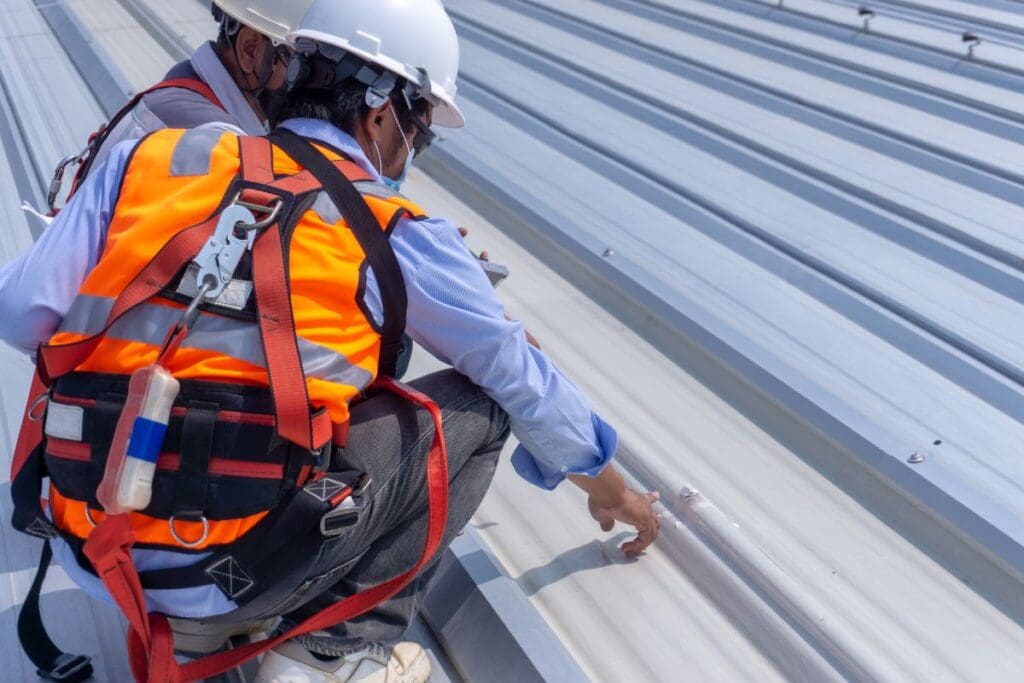
Fastener sealant is the most failure-prone sealant location on exposed fastener metal roofing systems. Inspect each fastener head for cracking, shrinkage away from the metal surface, or missing sealant entirely. On large commercial roofs across Pennsylvania and surrounding areas, spot checking a representative sample of fasteners across different thermal zones gives a reliable picture of overall system sealant condition without requiring individual inspection of every fastener.
What to Check at Panel Laps and Ridge Conditions
Panel end lap sealant and ridge cap bedding sealant should be inspected for adhesion loss at edges, surface cracking, and compression failure where two panels have moved relative to each other. Any location where the sealant bead shows a visible gap between the sealant and the metal surface on either side of the joint has lost its waterproofing function and requires replacement.
When to Schedule Professional Sealant Maintenance
| Sealant Location | Inspection Frequency | Typical Replacement Interval |
| Exposed fastener heads | Annually | 10 to 15 years depending on product |
| Panel end lap edges | Annually | 15 to 20 years with quality silicone or MS polymer |
| Ridge cap and hip terminations | Annually | 10 to 15 years |
| Flashing terminations at walls and penetrations | Twice annually | 10 to 15 years |
| Interior lap butyl tape | At major reroof or renovation | 20-plus years when properly applied |
Metal Roof Sealant Is a Maintenance Priority, Not an Afterthought
A metal roof that has been on a building for 20 years without sealant maintenance has almost certainly developed compromised joints at multiple locations. The panels may still look sound from the ground, but the fastener seals, lap edges, and flashing terminations have been cycling through temperature extremes for two decades with no intervention. That is where leaks live, and that is where a targeted sealant maintenance program delivers the most return.
Weathertite Solutions works with commercial property owners and facility managers across Pennsylvania and surrounding areas to assess metal roof sealant condition, specify the right products for each application, and apply them correctly as part of comprehensive metal roofing maintenance programs. Whether your building needs a sealant assessment to understand where the system stands, or targeted sealant replacement at identified failure locations, we bring the product knowledge and field experience the job requires. Contact us today to schedule your metal roof inspection and find out exactly what your sealant conditions need.