
When a commercial roof membrane is structurally sound but showing its age, full replacement is not always the right answer. There is often a more cost-effective path that extends service life, restores waterproofing performance, and delivers measurable energy savings without the disruption and expense of a tear-off. Silicone roof coating has become one of the most specified restoration solutions in commercial roofing for exactly that reason. Before committing to any restoration approach, understanding how coating fits into a broader commercial roofing strategy helps property owners make decisions they can stand behind for the next decade and beyond.
Here’s what you’ll learn in this guide:
- What silicone roof coating is and how it differs from other coating types
- The seven key benefits that make silicone a leading choice for commercial roof restoration
- Which roof types and conditions are best suited for silicone coating
- How silicone performs against acrylic and polyurethane coating alternatives
- What the application process involves and what to expect from a professional installation
Why Silicone Roof Coating Stands Out in the Commercial Market
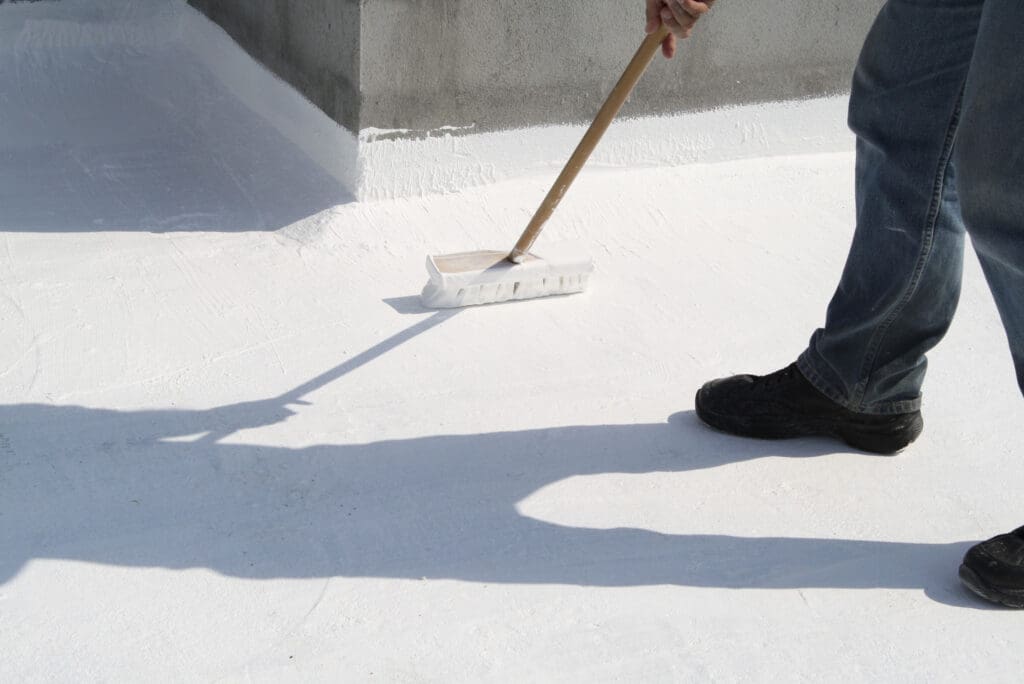
Not all roof coatings perform equally, and silicone has earned its position as the preferred choice for a specific and important segment of commercial roofing applications. Its chemistry gives it two properties that most competing coating products cannot match simultaneously: exceptional resistance to ponding water and UV stability that does not degrade meaningfully over its service life.
For commercial property owners across New Jersey and surrounding areas dealing with flat roofs that experience chronic ponding, this combination is significant. Acrylic coatings, the most economical alternative, are water-soluble and erode under standing water conditions. Silicone is not. It can sit under ponded water indefinitely without losing adhesion or waterproofing performance, which makes it the only coating product that is genuinely appropriate for roofs where complete drainage after every rain event is not achievable.
- Ponding water resistance: Silicone maintains full waterproofing integrity even when submerged under standing water for extended periods. This property sets it apart from every other commercially available coating chemistry and makes it the specification default for low-slope commercial roofs with drainage limitations.
- UV stability: Silicone does not oxidize, chalk, or degrade under UV exposure the way acrylic and polyurethane coatings do over time. Its reflectivity remains consistent throughout the coating’s service life without requiring recoating to restore performance.
- Broad temperature flexibility: Silicone remains flexible from well below freezing to temperatures well above what commercial roof surfaces reach in summer. That flexibility prevents cracking and adhesion loss through the freeze-thaw cycling that is routine across New Jersey and surrounding areas.
- Long service life: A properly applied silicone coating system can deliver 15 to 20 years of performance before requiring recoating. That service interval is significantly longer than most acrylic systems and comparable to the more expensive polyurethane alternatives.
- Energy cost reduction: White and light-colored silicone coatings reflect solar radiation rather than absorbing it, reducing rooftop surface temperatures dramatically and lowering building cooling loads during summer months when energy costs are highest.
6 Benefits of Silicone Roof Coating For Commercial Roofs
The case for silicone coating is not theoretical. Each benefit translates directly into building performance outcomes and financial returns that property owners and facility managers can quantify. Here is a detailed look at the seven most significant advantages.
1. Superior Resistance to Ponding Water
Ponding water is one of the most damaging conditions a commercial flat roof can experience, and it is also one of the most common. Buildings with insufficient drainage slope, clogged outlets, or structural deflection routinely hold water for days after rainfall. For roofs in that condition, silicone is the only coating chemistry that does not require a dry roof surface to maintain its waterproofing function.
- Unlike acrylic coatings, which begin to soften and erode when submerged, silicone maintains its cross-linked molecular structure under continuous water exposure
- Silicone’s ponding water resistance means it can be specified on roofs where drainage correction through tapered insulation or additional drains is not feasible or budgeted
- The resistance applies throughout the coating’s service life, not just at initial installation; silicone does not become more water-susceptible as it ages
2. Long-Term UV Stability Without Performance Loss
Roof coating products are exposed to UV radiation continuously, and most coating chemistries respond to that exposure by oxidizing, chalking, and losing both reflectivity and flexibility over time. Silicone chemistry is inherently UV stable. The molecular bonds in cured silicone are not broken down by UV radiation in the way that carbon-based coating chemistries are, which means the product maintains its performance characteristics across its full service life.
- Acrylic coatings typically require recoating every five to ten years to restore reflectivity as chalking reduces their solar reflectance index rating
- Silicone maintains its reflectivity without intermediate recoating, which reduces long-term maintenance costs significantly for large commercial roofs
- The UV stability of silicone also means its surface remains more flexible over time than competing products, maintaining better adhesion at substrate movement joints
3. Significant Energy Savings Through Solar Reflectance
A white or light-gray silicone coating applied to a commercial flat roof can reflect 80 to 90 percent of incoming solar radiation compared to the two to five percent reflected by a dark EPDM surface or the 20 to 30 percent reflected by an aged modified bitumen surface. That difference in solar reflectance translates directly into lower rooftop surface temperatures and measurably reduced building cooling loads.
- Commercial buildings in New Jersey and surrounding areas with large roof-to-floor-area ratios see the most significant energy impact from reflective coating, as a larger proportion of the building’s heat gain comes through the roof
- Energy Star and CRRC certification is available for silicone coating systems that meet minimum reflectance and emittance thresholds, supporting compliance with energy codes and green building certification programs
- Utility rebates for cool roof installations are available in some jurisdictions; a qualified contractor familiar with programs in New Jersey and surrounding areas can advise on applicable incentives
4. Cost-Effective Alternative to Full Roof Replacement
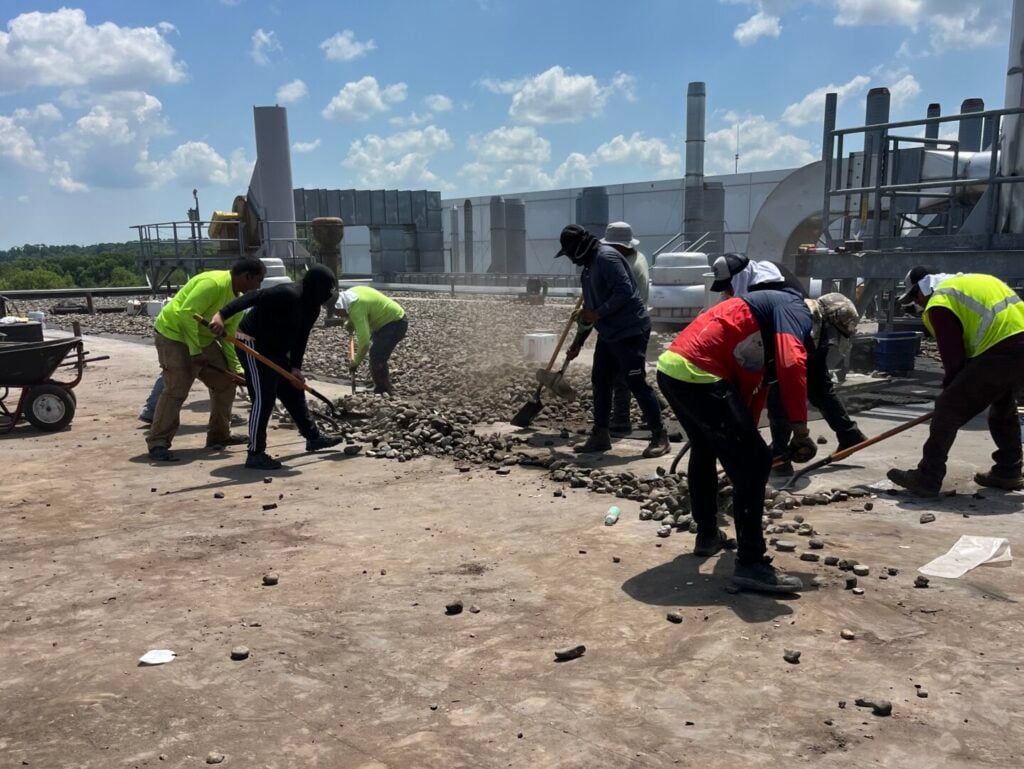
The installed cost of a silicone coating system typically ranges from $2 to $5 per square foot depending on surface preparation requirements, coating specification, and project size. Full commercial roof replacement, by contrast, commonly runs $8 to $20 or more per square foot. For a building owner facing a roof at the end of its service life but with a sound substrate and dry insulation, coating delivers restoration of waterproofing performance at 25 to 40 percent of replacement cost.
- The savings are amplified on large commercial roofs where the absolute cost differential between coating and replacement represents a six-figure or greater capital expenditure deferral
- Coating also avoids tear-off costs, disposal fees, and the operational disruption associated with full replacement, adding non-material value beyond the direct cost comparison
- When the silicone coating eventually reaches the end of its service life, recoating with another silicone application is typically possible without full system removal, extending the cost-effectiveness of the initial investment
5. Seamless Waterproofing Membrane Application
Silicone coating is applied as a fluid that cures to a seamless, monolithic membrane across the entire roof surface. Unlike single-ply systems that have seams at panel laps and penetration flashings, a properly applied silicone coating covers the entire substrate surface without joints that can separate, delaminate, or admit water at transition points.
- The seamless nature of fluid-applied coatings is particularly valuable at penetration details and complex geometry areas where membrane-based systems require custom fabrication and hand seaming
- Silicone coating conforms to the existing surface contours, covering minor surface irregularities and bridging small surface cracks in the underlying membrane
- The absence of seams also means the coating does not have the thermal movement stress concentrations at lap edges that cause single-ply membrane failures over time
6. Minimal Disruption During Application
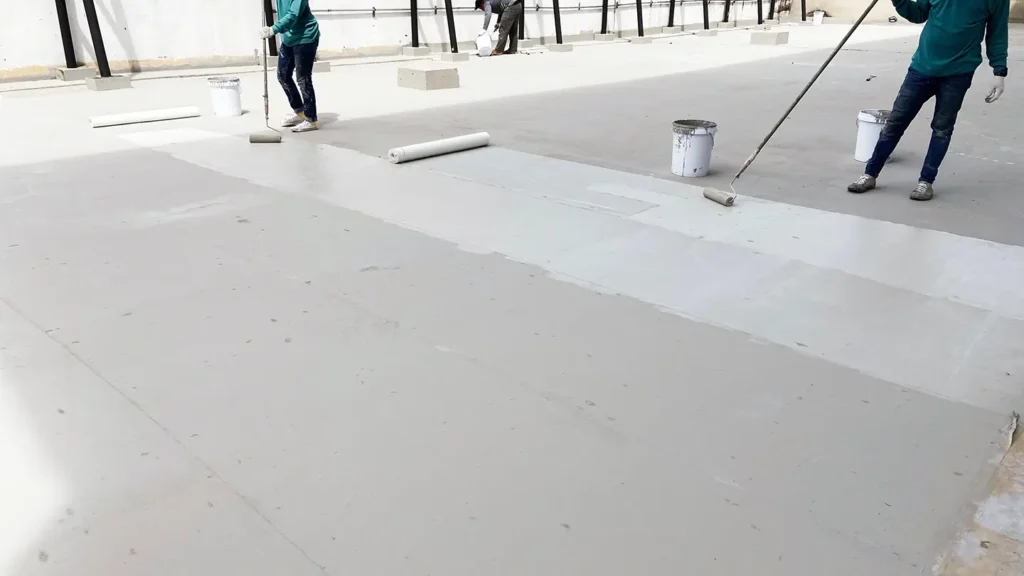
Silicone coating application does not require tear-off of existing roofing, heavy equipment access, or extended closure of rooftop mechanical systems. Application is typically completed by a crew with spray equipment, rollers, and brushes for detail work, with minimal noise and no significant structural loading on the building.
- Most commercial silicone coating projects on buildings of 10,000 to 50,000 square feet can be completed within a few days, compared to the weeks-long process that full replacement typically requires
- Occupants and building operations are generally not affected by coating work, as the only access restriction during application is on the roof surface itself
- The low-VOC formulation of most silicone coatings minimizes odor concerns for occupied buildings, though ventilation coordination with building management is still recommended during and immediately after application
Is Your Roof a Candidate for Silicone Coating?
Silicone coating is not the right solution for every commercial roof, and understanding the conditions that make a roof a strong candidate is essential for making a good decision. The most important assessment factors are substrate condition, insulation moisture content, and the current state of the existing membrane.
- Sound substrate required: Silicone coating restores surface waterproofing on a membrane that is structurally intact. It does not correct underlying structural deficiencies, saturated insulation, or widespread membrane delamination. A moisture scan before coating is standard practice to confirm the substrate is dry.
- Membrane compatibility: Silicone adheres well to most commercial roofing membranes including TPO, EPDM, modified bitumen, built-up roofing, metal, and spray polyurethane foam when properly primed. Substrate-specific primer selection is critical to achieving full adhesion.
- Repair scope before coating: Any open seams, punctures, blisters, or flashing failures must be repaired before coating is applied. Coating over unrepaired damage traps the problem beneath the coating and accelerates future failure at those locations.
- Drainage assessment: While silicone tolerates ponding water, areas of chronic ponding still accelerate biological growth on the coating surface over time. Addressing drainage issues before or in conjunction with coating improves long-term performance.
How Silicone Compares to Other Commercial Roof Coating Options
Property owners evaluating coating options frequently ask how silicone stacks up against the other primary commercial coating types. The honest answer is that each has a context where it is the right choice, and silicone is not universally superior for every application.
| Feature | Silicone | Acrylic | Polyurethane |
| Ponding water resistance | Excellent | Poor | Good |
| UV stability | Excellent | Moderate | Good |
| Installed cost per square foot | Moderate to higher | Lower | Higher |
| Paintability after cure | No | Yes | Yes |
| Recoatability | Silicone over silicone only | Good with compatible products | Good with compatible products |
| Cold temperature flexibility | Excellent | Moderate | Good |
| Best application | Low-slope roofs with drainage limitations | Roofs with complete drainage and light foot traffic | Roofs with foot traffic exposure |
For the majority of commercial flat roof restoration projects in New Jersey and surrounding areas, silicone is the specification that delivers the best combination of ponding resistance, UV stability, and long-term performance. Acrylic is appropriate where budgets are constrained and drainage is reliable. Polyurethane earns its place on roofs with significant foot traffic demands.
The Right Coating Decision Starts With the Right Assessment
A silicone coating that is correctly specified for the substrate, applied at the right thickness over properly prepared surfaces, and backed by a manufacturer warranty is one of the most financially sound investments available in commercial roofing. One that is applied over a wet substrate, at insufficient thickness, or with inadequate surface preparation will fail early and require removal before another coating attempt is possible.
Weathertite Solutions works with commercial property owners and facility managers across New Jersey and surrounding areas to assess roof coating candidacy, specify the right coating system for each substrate and performance requirement, and apply it with the surface preparation and application standards that manufacturer warranties require. Whether you are exploring silicone coating as an alternative to replacement or want an expert assessment of whether your specific roof qualifies, we give you the information your building deserves. Contact us today to schedule your coating assessment and find out whether silicone is the right solution for your commercial roof.